A small evening bag can change the feel of your whole outfit. A crisp clutch gives loose trousers a sharper finish, while a softly gathered mini bag can relax a structured dress. For nights out, the best choice brings together shape, texture, proportion, and a carrying style that feels comfortable. Try choosing your bag alongside your shoes and outer layer so every piece feels connected.
Decide what you want the bag to add
Before looking at colors, identify what your outfit already does well. Is the dress full of movement? Does your top have an elaborate neckline? Are your trousers clean and tailored? Your bag can repeat one of those qualities or introduce a useful contrast. Giving it a clear role makes the final choice easier.
If your clothes have plenty of detail, a plain bag provides a quiet place for the eye to rest. If your outfit is simple, a sculptural clutch or textured mini bag can become the main accessory. Neither approach needs matching shoes, jewelry, and bag hardware throughout. A few deliberate connections usually feel more natural than repeating every detail.
Choose a shape that works with your clothes
Structured clutches for definition
A rectangular envelope clutch or firm box shape adds a clear edge to soft clothing. Try one with a draped jersey dress, a flowing skirt, or relaxed trousers and a slouchy top. The contrast can make the outfit look considered without adding more decoration. Rounded corners soften the effect if a very angular bag feels too formal for your plans.
Look at the clutch from the side as well as the front. A very flat design can bulge when used, changing its neat outline. A little depth often helps a structured bag keep its intended shape. Check that the closure stays aligned when the bag contains your usual essentials.
Soft mini bags for an easier finish
A gathered pouch, curved shoulder bag, or supple top-handle mini can soften strong tailoring. Pair one with a fitted blazer, straight trousers, or a dress with a defined shoulder. Softness does not have to mean casual: a simple silhouette with tidy seams can still look polished enough for dinner and drinks.
Notice how the bag looks when held rather than displayed empty. Some soft designs collapse attractively; others fold across their decorative detail. Try lifting the handle and setting the bag down. You want the shape to feel intentional in the situations where you will actually use it.
Use proportion without body-shape rules
You do not need to choose a bag according to your height or dress size. Start with the scale of the clothing instead. A tiny rigid clutch beside a voluminous sleeve creates a strong contrast, which you may enjoy. A slightly wider pouch can give the same outfit a softer, more balanced finish. Both can work; the difference is the effect you want.
Check where the bag sits in relation to hems, pockets, and waist details. A short shoulder bag might tuck neatly beneath your arm or land awkwardly against a large sleeve. A top handle may cover a tie at your waist when you hold it in front. Move the bag around while wearing the full outfit to find a position that lets the clothing details remain visible.
Pick a finish that suits the setting
Smooth matte finishes are useful when you want the bag to blend into an outfit. Glossy surfaces create a stronger visual accent, while woven or embossed textures add depth without requiring a bright color. Fabric bags can feel especially suited to evening clothes, but their surface needs to work with what you are wearing.
- With lace: choose a smooth bag if you want the lace pattern to remain the focus.
- With ribbed knitwear: a firm, clean surface introduces contrast and definition.
- With crisp tailoring: a softly textured pouch can make the outfit feel less severe.
- With a printed dress: a quiet finish helps avoid competing focal points.
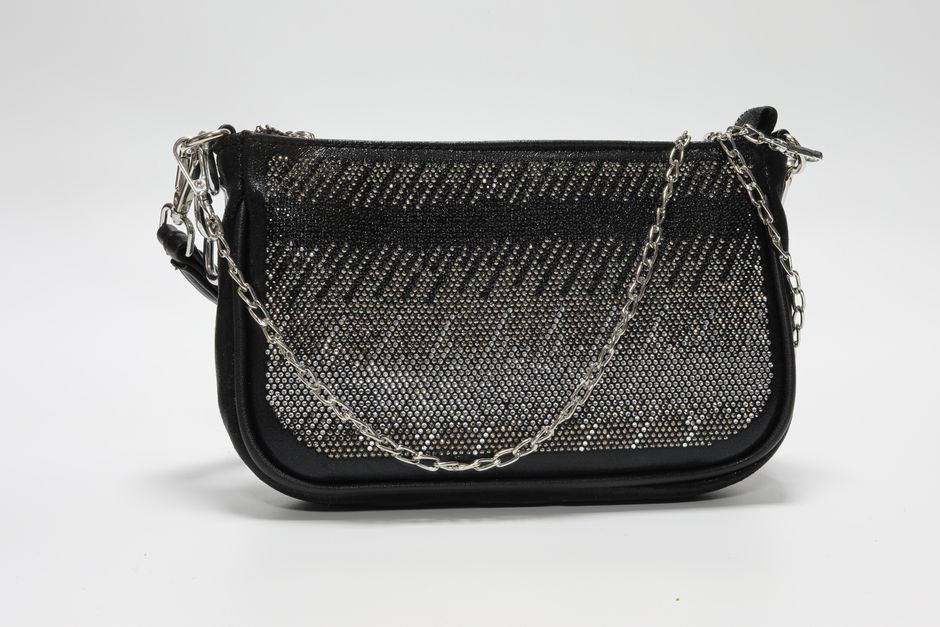
Run your hand gently over any raised decoration. Rough beads, exposed metal edges, or uneven embellishments may catch delicate clothing. Pay particular attention to the part of the bag that rests against your hip or beneath your arm. An attractive texture is much easier to enjoy when it does not snag your outfit.
Connect colors without matching everything
A bag can pick up a small color in a print, echo the warmth of your shoes, or sit within the same color family as your dress. These softer connections often give you more flexibility than trying to find an exact match. When two near-identical shades look slightly wrong together, a clearer difference may feel more deliberate.
For an outfit in one color, experiment with lightness and texture. A deep brown bag against a lighter brown dress can create definition, while a smooth bag beside a textured garment keeps the look varied. With a colorful outfit, try the bag beside your outer layer too. It will spend part of the evening against that piece rather than the clothes underneath.
Make handles and hardware part of the styling
The handle changes both the appearance and feel of a mini bag. A rigid top handle creates a more upright silhouette, while a soft loop feels relaxed. A chain introduces a jewelry-like detail, so consider it alongside bracelets and earrings. Mixed metals can look good together when the overall balance feels intentional; exact matching is optional.
Try any removable strap in both positions before relying on it. When tucked inside, it should leave room for the closure to work without pressing against the contents. When attached, the clips should sit securely. Hold a clutch for a few minutes and check whether the edges dig into your fingers or the wrist loop feels restrictive.
Try complete outfit combinations
A simple dress with a curved bag
Pair a plain fitted dress with a curved mini bag in a contrasting texture. Keep the remaining accessories restrained so the change in shape stands out. If the dress has an asymmetric neckline, hold the bag lower at your side and check the overall outline in a mirror.
Jeans, an evening top, and an envelope clutch
A slim clutch can connect casual denim with a more dressed-up top. Choose a finish that relates to one element, such as the smoothness of your shoes or the color of your jacket. The bag supplies a clear evening detail without requiring every part of the outfit to feel formal.
Give the bag a movement check
Before leaving, sit down, put on your jacket, and walk around with the bag as you intend to carry it. Check that you can open and close it comfortably and keep it close in a busy space. For dancing, a secure carrying option may matter more than a perfectly posed silhouette. Choose the bag that still feels good once you stop standing still.