Spring club outfits can feel awkward when your wardrobe is still arranged for winter. The afternoon looks inviting, but the journey home may be chilly, and a busy dance floor feels nothing like the pavement outside. You do not need to replace every dark piece or switch straight into summer clothes. The useful change is to reduce bulk gradually, keeping enough coverage for the parts of the evening that happen outdoors. Start with an outfit you already enjoy, then adjust its weight, texture and proportions for the night ahead.
Plan for the whole evening
Before choosing clothes, think through your route: getting to the venue, waiting outside, spending time indoors and returning home. Check the forecast for the hours you will actually be out, including wind and rain. A mild start does not guarantee a comfortable finish. If you are walking between venues, your outfit needs more weather protection than it would for a short ride to one entrance.
Check the venue’s dress code and cloakroom arrangements too. Knowing whether you can check an outer layer helps you decide how much to carry. Keep your indoor outfit complete on its own, so taking off a layer feels natural. Your travel plan should support the clothes you want to wear without leaving you cold while waiting for transport.
Make one seasonal change at a time
The easiest transition begins with a familiar winter outfit. Identify what makes it feel heavy: perhaps a thick knit, several dense fabrics or coverage from neck to ankle. Change one of those elements first. You might replace a chunky jumper with a smooth long-sleeved top, while keeping your usual trousers and closed shoes. Try the result before deciding that anything else needs changing.
This approach also makes spring dressing less dependent on shopping. A piece that disappeared beneath winter layers may become the focus of your evening look. A top with an interesting neckline, for instance, can provide all the detail you need once a bulky scarf and cardigan are removed.
- If the night is cool: keep your covered silhouette and choose a less bulky top.
- If the weather is settled: try shorter sleeves while retaining full-length bottoms.
- If conditions are uncertain: keep your preferred coverage and introduce spring through color or texture.
Reduce bulk before reducing coverage
Lighter dressing does not have to mean more exposed skin. Full-length trousers in a fluid fabric can feel more suitable for spring than a thick, tightly fitted pair. A fine jersey top can sit neatly beneath an outer layer without the bunching of a heavy knit. Look at how the complete outfit feels when you sit, walk and lift your arms, rather than judging its suitability by sleeve length alone.
Check linings and overlapping sections
A garment’s appearance does not tell you everything about its warmth. A lightweight-looking dress may have a substantial lining, while a softly structured top may feel surprisingly airy. Check the layers around your waist and underarms, where seams, linings and overlapping clothes can accumulate. If the outfit already feels hot while you are getting ready, it may be uncomfortable once you start dancing.
Keep a balance you can adjust
Choose one removable layer that works over your finished outfit rather than stacking several pieces you will need to manage indoors. Check that the sleeves underneath slide comfortably into it and that the neckline does not bunch. If you cannot use a cloakroom, consider whether you can comfortably keep the layer with you. The best arrangement is one you can handle without constantly rearranging your clothes.
Let texture signal the change of season
You can keep wearing black, charcoal and other familiar shades through spring. What often changes the mood is the surface of the fabric. Replacing a brushed or chunky texture with a smoother finish makes an outfit feel lighter without demanding a completely different palette. Keep a favorite substantial piece if you enjoy it, then give it a less weighty partner.
For example, dark trousers paired with a softly draped top can look fresh even when both pieces are black. If you prefer color, introduce one shade near your face or through a garment you already own. Muted blue, soft green or a warm neutral can sit comfortably beside winter staples. There is no need to use pale shades if they do not feel like you.
Try combinations built around the transition
These outfits use the same principle in different ways: retain something dependable, then change the element that carries unnecessary winter weight. Use the ideas as starting points and adapt them to your preferred coverage and the venue.
Dark trousers with a lighter top
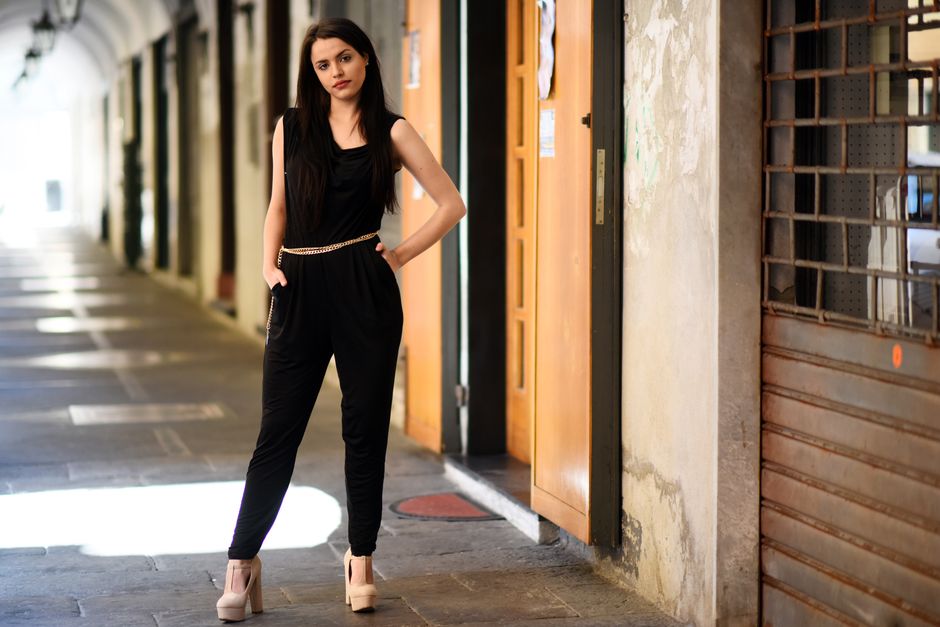
Keep well-fitting dark trousers and pair them with a smooth, short-sleeved or sleeveless top. Choose a neckline that feels secure when you move, and add your outer layer for travel. The trousers provide familiar coverage while the top changes the overall feel. If short sleeves feel premature, a fine long-sleeved version makes an equally useful step into spring.
A simple dress with less bulk around it
Bring back a dress that has spent winter under heavy knitwear. Wear it with a streamlined outer layer and shoes you already know are comfortable. Check whether the dress itself provides enough coverage for your plans before removing other elements. You can create a lighter outline without insisting on bare legs or open shoes before the weather suits them.
A soft knit with a fluid skirt
If you still want the comfort of knitwear, choose a finer piece and combine it with a skirt that moves easily. Check where the waistband and knit meet: a small tuck may work, but forcing a thick hem inside can create pressure and bunching. Keep the styling simple so the difference in texture gives the outfit its interest.
Keep footwear in step with the weather
You can lighten the rest of your outfit while continuing to wear closed shoes. Spring pavements may still be wet, and a route that includes uneven ground needs dependable footing. Before leaving, inspect the soles and make sure your shoes feel secure with the socks or hosiery you plan to wear. Changing those layers can alter the fit of a familiar pair.
If you are considering more open footwear, let the forecast and your journey guide the decision. You should be able to walk comfortably to your pickup point and stand while waiting. An outfit does not become more seasonally appropriate simply because your feet are cold.
Give the finished outfit a movement check
Try everything on together before you need to leave. Sit down, reach forward and take a few dance steps. Check that hems stay where you want them, waistbands allow easy breathing and straps remain secure. Then put on your outer layer and carry your bag. This catches combinations that look good separately but become awkward when worn together.
Finally, remove the outer layer and look at the outfit again. It should feel ready for the venue without needing repeated adjustments. Keep the winter elements that still serve a purpose, lighten what feels cumbersome and let the actual evening determine the rest. A successful spring club outfit gives you room to enjoy the change of season at your own pace.