Cold January nights can make getting dressed for an evening out feel like a choice between looking put together and feeling at ease. You can have both by building your outfit around how you want to feel once you arrive: able to sit through dinner, move between venues, and enjoy a conversation without adjusting your clothes. Give softer fabrics, forgiving waistbands, and comfortable separates a turn. The aim is an outfit that feels relaxed on your body while still looking intentional after dark.
Make comfort specific to your evening
Start with the part of a night out that usually bothers you. Perhaps your waistband digs in when you sit, your sleeves restrict your shoulders, or a tucked top keeps escaping. Solving that particular problem is more useful than choosing something simply because it looks comfortable on a hanger.
Think about the main activity, too. A seated meal calls for room through your middle and clothes that do not bunch behind your knees. A lively evening needs easy movement through your hips and shoulders. If you will be moving between both, choose an outfit that passes a seated check as comfortably as a standing one.
January plans often feel more informal after the busy party season. You do not need an elaborate look for every invitation. One interesting texture, a considered neckline, or a neatly finished silhouette can provide enough evening character.
Choose fabrics that feel good against your skin
Touch the inside of a garment as well as the outside. A beautifully textured top may have rough seams, while smooth trousers may have a stiff waistband. Pay attention to the areas that stay in contact with your body: the neck, underarms, waist, and inner thighs.
Soft jersey, fine knits, and supple woven fabrics can all work for going out. The best choice depends on the garment’s construction. A substantial jersey with a clean finish can look polished, while a very thin knit may reveal every seam underneath. Hold the fabric up to the light and check it in your usual underwear before committing to the outfit.
- Check recovery: gently stretch a cuff or waistband and see whether it returns to its shape.
- Check the lining: it should allow the same movement as the outer fabric.
- Check the surface: pilling, snagged threads, or flattened areas can make a simple piece look tired.
- Check the weight: choose enough substance to drape smoothly without feeling cumbersome indoors.
Try four relaxed outfit combinations
A fine-knit top with soft straight-leg trousers
A fitted or gently skimming knit gives straight-leg trousers a clear shape without requiring a tight waistband. Try a shallow scoop neck, a boat neck, or a simple open collar, depending on what feels comfortable. The trousers should fall freely from your hips and allow you to sit without pulling across the front.
Finish with a compact earring and a clean shoe shape. If you tuck the top, leave enough ease to reach upward without tugging at the waistband. A knit that ends near the top of your hips can also sit neatly untucked, especially when the hem is firm and even.
A soft long-sleeved dress with a relaxed waist
Look for a dress that follows your shape without relying on constant tension. Gentle gathers, a softly defined waist, or an adjustable tie can give structure while leaving breathing room. Make sure the tie stays comfortable when seated and does not create a bulky knot against your chair.
A simple neckline leaves space for one small finishing detail, such as a pendant or earrings. Before leaving, walk and sit in the dress to see where the skirt settles. A hem that stays where you expect it makes the whole outfit easier to enjoy.
A polished cardigan with a fluid skirt
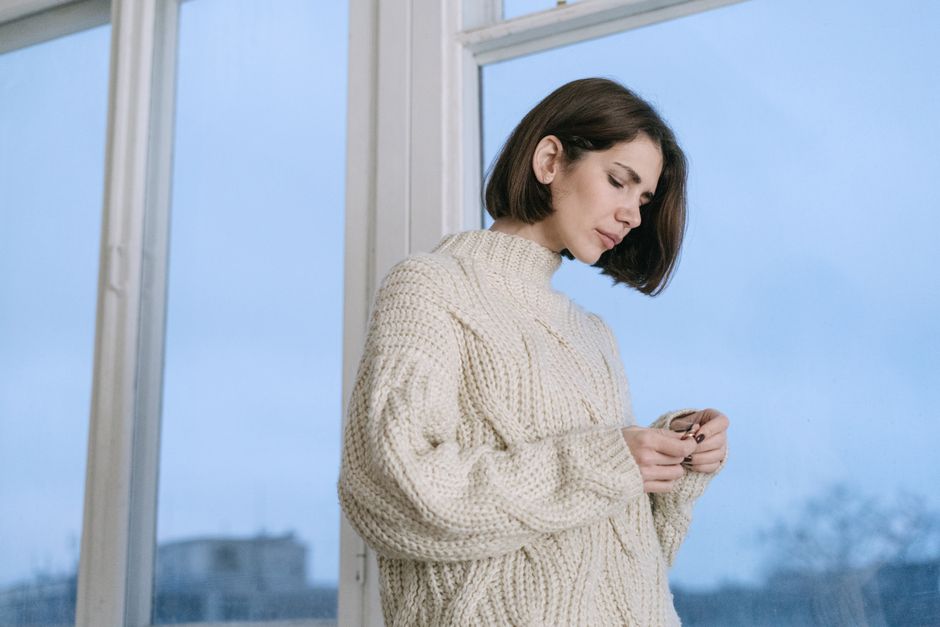
A fine cardigan worn as a top can feel reassuringly familiar while looking ready for an evening out. Choose one with buttons that lie flat and a neckline that stays in place. Pair it with a lined skirt that moves easily, checking that the lining does not catch when you take a full stride.
Keep the proportions clear: a shorter cardigan can sit just above the skirt’s waist, while a longer one may work with a loose front tuck. If the buttons pull, choose a roomier fit or wear a smooth top underneath and leave the cardigan open.
Dark relaxed jeans with a softly structured blouse
For a casual venue, dark jeans and a blouse can strike an easy balance. Choose denim you can comfortably sit in, with a waistband that stays secure without pinching. A blouse with a gentle shoulder line, soft collar, or subtle gathered sleeve brings enough detail to distinguish the look from everyday errands.
Check that the blouse has room across your back when you reach forward. If its hem is curved and finished neatly, wearing it untucked may feel better than adding fabric inside your jeans. Keep the rest of the outfit simple so the blouse remains the focus.
Give the outfit shape without adding pressure
Comfortable clothes look considered when their edges and proportions work together. You might pair a relaxed lower half with a closer-fitting top, or a softly shaped dress with a clear shoulder line. You do not need to cinch every loose garment with a belt.
Look at your outfit from the side as well as the front. Bunched fabric at the waist, sleeves caught inside cuffs, and uneven hems can interrupt an otherwise easy silhouette. A small adjustment, such as smoothing a tuck or turning back a sleeve once, may be all you need.
Use one detail to signal evening: a softly lustrous fabric, an interesting neckline, or a favourite piece of jewellery. Keeping that detail away from areas that rub or snag helps it remain enjoyable throughout the night.
Check the complete outfit before leaving
Try everything on together, including your underwear and whatever you will wear outdoors. Cold weather makes it especially useful to check that sleeves slide easily into your coat and that nothing bunches around your shoulders. Choose outdoor coverage appropriate to the actual conditions and your journey.
- Sit in a firm chair and lean forward as you would at a table.
- Reach overhead, bend gently, and take several full strides.
- Check necklines, button gaps, and skirt movement in a mirror.
- Walk in your shoes and notice any rubbing or unstable footing.
- Remove anything that needs repeated adjustment and try a simpler alternative.
If pavements are wet or icy, let the route influence your footwear and transport plans. A comfortable outfit still needs a practical journey home. Once those details are settled, stop refining every small element. Clothes that let you sit, move, and settle into the evening have already done their most important job.