Pride party outfits full of color can be playful, personal, and easy to move in. You might want a full rainbow, a combination inspired by a flag that matters to you, or a favorite bright shade repeated throughout your look. There is no required level of boldness. The aim is to put together clothes that feel like yours while making room for the celebration. Start with the event you are actually attending, then use color placement, familiar silhouettes, and a few thoughtful details to create an outfit you can enjoy wearing.
Start with the kind of Pride party
A daytime community gathering followed by dancing asks different things of your clothes than an evening seated event. Before choosing colors, think through where you will spend your time: walking between venues, sitting outdoors, standing in a queue, or moving around a busy dance floor. Check the event information for dress requirements and any restrictions on bags or accessories.
Choose a base outfit that already works for those activities. This could be trousers and a sleeveless top, a simple dress, or shorts with a shirt. Starting with a familiar shape makes it easier to experiment with color without also adjusting to a completely unfamiliar fit.
Choose a color idea you can build around
A rainbow distributed across the outfit
You do not need every rainbow shade in one garment. Spread colors across larger and smaller pieces: a red top, blue trousers, and a multicolored scarf can create a cheerful combination without matching exactly. A striped shirt or color-block dress can also do most of the work, leaving your shoes and bag simple.
Look at how the colors sit next to one another when the whole outfit is on. If everything seems to compete, remove one accessory or repeat a shade already present. Repetition gives a colorful outfit a sense of connection, even when the individual pieces are quite different.
A flag-inspired palette
If you want to reference a particular Pride flag, choose the colors intentionally and check their arrangement if you are reproducing the flag itself. You can echo a palette through separate garments, stripes, or small accents. A pink shirt, purple trousers, and blue earrings, for example, can suggest a meaningful combination without requiring a printed outfit.
You never need to explain your identity through your clothing. Wear a flag or palette because it feels appropriate to you, and avoid treating someone else’s identity as a costume. Color can be expressive without becoming a demand for disclosure.
One dominant color with supporting accents
If a full rainbow feels unfamiliar, let one shade lead. A vivid green dress with a small multicolored bag still feels celebratory. So does a purple outfit with contrasting yellow details. Choose the main color first, then add accents where you naturally enjoy attention, such as your neckline, wrists, or shoes.
Decide where you want the strongest color
Color placement helps you shape the mood of an outfit without rules about which bodies should wear what. A bright top keeps the visual focus near your face; colorful trousers make a simple upper half feel intentional. An all-over print spreads interest across the entire look. Choose the effect you like rather than trying to correct your proportions.
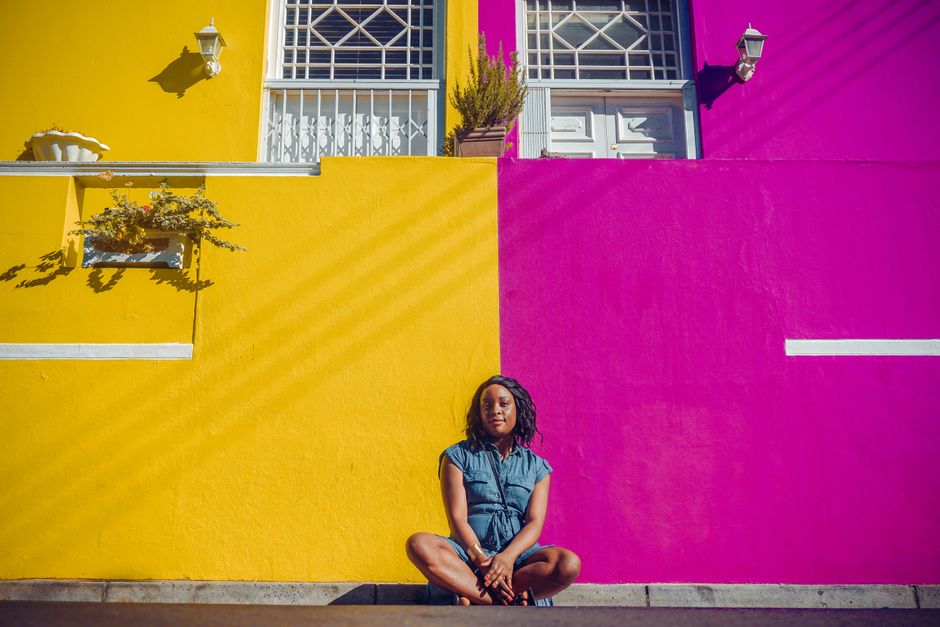
If you are combining two strong shades, give them clear areas. A cobalt shirt tucked into orange trousers often looks easier to read than several tiny patches of unrelated color. Leave enough of each garment visible for the pairing to feel deliberate, especially if you are adding an open layer.
Try outfit combinations with a clear color story
- Rainbow stripes and a solid base: Wear a striped knit or shirt with plain shorts or trousers. Pick one stripe color for a small accessory to tie the look together.
- Two bold separates: Pair a pink top with red trousers, or a turquoise shirt with purple shorts. Simple shapes let the unexpected pairing stand out.
- A colorful printed dress: Choose one shade from the print for your shoes or bag. Keep extra patterns limited if you want the dress to remain the focus.
- A neutral outfit with concentrated color: Add a rainbow scarf, bright belt, or colorful overshirt to clothes you already love. A neutral base can make those details especially visible.
- A coordinated group palette: Let each person choose a different color or interpret the same palette in their own way. Keep the agreement flexible so everyone can dress comfortably.
Use these as starting points rather than shopping lists. Lay out what you own and look for connections between colors before deciding anything is missing. An ordinary shirt can become the key piece when paired with a shade you have never worn beside it.
Mix prints and textures without losing the colors
When combining prints, look for a shared shade. A striped top and floral skirt can feel connected when both contain the same blue or pink. Different pattern sizes can help each remain readable: narrow stripes beside a larger floral are often easier to arrange than two equally busy small prints.
Texture changes how color appears, too. Matte cotton gives a bright shade a different character from glossy satin or textured crochet. If a combination feels overwhelming, simplify either the print or the finish. You can keep plenty of color while choosing mostly matte fabrics and one textured detail.
Make colorful details comfortable to wear
Accessories are useful for adding colors you do not have in your clothing, but check how they behave when you move. Long ribbons can trail, catch, or wrap around nearby objects. Secure scarves and loose decorations, and keep anything dangling away from your feet. Earrings should feel comfortable when you turn your head or raise your arms.
If you wear a flag as part of your outfit, decide how to carry or secure it without covering your hands or creating a dragging hem. Avoid fastening anything tightly around your neck. A small flag detail on a bag may suit a crowded party better than a large piece of fabric you need to manage all evening.
Check the outfit in motion and changing light
Try the complete outfit on before leaving, including the underlayers and shoes. Sit down, reach upward, take a few long steps, and dance briefly. Notice whether a waistband rolls, a fastening pulls, or a decoration scratches. Adjust the problem while you have other clothes nearby, rather than relying on constant readjustment later.
Check pale panels and stretchy fabrics in daylight as well as indoor light. Stretching can make some areas more transparent, and a white section in a rainbow print may need a different underlayer from its darker sections. Choose coverage according to your own comfort. If the event includes outdoor time, add appropriate sun protection and a layer that works with your outfit.
Finish with the details that feel like you
Before heading out, look at the outfit as a whole and ask whether you can comfortably spend the event in it. Keep the colors and details that make you smile; remove anything that needs more attention than you want to give it. Pride style has room for a carefully arranged rainbow, a quiet flag reference, and a bright combination chosen simply because you love it. Your outfit can celebrate color while leaving you free to take part.