Glasses create a few practical makeup challenges: frames touch the base around the nose, lenses change how details appear and the frame can cast shadows. These are placement problems, not reasons to apply a heavier full face. A lighter layer at contact points and a check with the glasses on can make the routine more predictable.

Begin by cleaning your glasses according to their maker’s instructions. Smudged lenses can make it difficult to assess your makeup, and residue on nose pads can mix with fresh base. Let the glasses dry before putting them back on. Keep cosmetic products away from the lenses while applying.
Locate the actual contact points
Put the frames on before makeup and notice where they rest. Some touch mainly at separate nose pads; others sit across a wider bridge. Check whether the lower rim meets your cheek when you smile. Your makeup plan should respond to those specific points rather than treating the whole nose as one problem area.
If the frames slide constantly or feel uncomfortable, have their fit checked by an optician. Extra powder cannot correct a frame that repeatedly moves across the same patch of skin. Do not bend the frame or alter the nose pads yourself unless the manufacturer provides an appropriate adjustment method.
Use the thinnest useful base under the bridge
Apply your usual preparation and let each layer settle before adding foundation. Around the bridge, begin with the small amount remaining on your application tool. You may not need a fresh pump or dot there. If a particular area needs coverage, place a trace of concealer precisely instead of building a thick foundation band.
Wait until the surface is no longer obviously wet before trying the glasses. If you use powder, press on a small amount with a narrow brush at the contact points. Brush away loose excess. A thick powder layer can leave a more visible mark when the frame presses into it.
Do not coat the glasses with makeup products
Keep powder, primer and setting spray on their intended cosmetic surfaces, following their labels. Applying them to nose pads is not a reliable fix and may leave residue on the frame or lenses. Solve the makeup thickness and fit questions separately.
Judge eye detail through the lenses
Put your glasses on after a simple first pass of eye makeup. Some prescriptions make the eyes appear larger; others make them appear smaller. Frame width and color also influence what you notice. Use the view in your own mirror rather than following a universal rule that glasses require dark liner or very bright shadow.
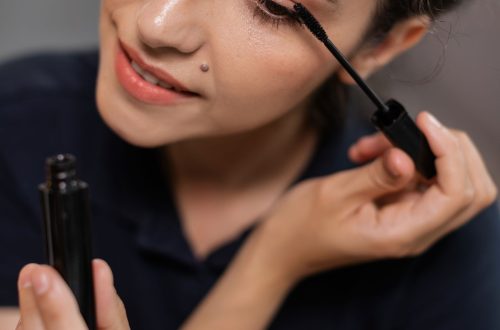
If your lash tips touch the lenses, adding more mascara to the tips may make that contact messier. Try a lighter application, keep lashes separated and allow the formula to dry before wearing the glasses. Choose eye products you already find comfortable and keep them out of the eye.
Distinguish a shadow from uneven makeup
Look at the under-eye area with and without the frames. If a dark area appears only with the glasses on, frame shadow may be contributing. Move toward even, indirect light and compare again. Adding a large pale patch of concealer to compensate can look conspicuous when the light or head angle changes.
Use targeted concealer only where you want to soften visible color, then check through the lenses again. The same applies to brows: a frame may hide part of a carefully drawn shape. Keep brow color balanced with the visible face rather than making it darker simply to compete with the frame.
Pack a contact-point repair kit
- A clean tissue for gently lifting surface shine.
- A small mirror to inspect the bridge without the frames.
- Your existing concealer for localized replacement, if needed.
- A lens cloth kept separately from cosmetic tools.
When a nose mark appears, take the glasses off and inspect the area before adding product. Smooth a small ridge gently with a clean fingertip or tool. Replace only the missing coverage. Repeatedly layering powder over a compressed patch can make the boundary more pronounced.
Finish every application with the glasses you actually plan to wear. Smile, turn your head and check the bridge, cheeks and eye detail. This final check makes the routine specific to your frames and gives you a realistic idea of where a later touch-up might be useful.