Rain changes more than how wet your clothes become. It can hide uneven ground, reduce visibility, and make a familiar corner slippery. Deciding whether and where to run matters more than proving that a jacket can keep you dry.

Light rain on a known, well-drained route may be manageable. Thunderstorms, flooding, ice, strong winds, or dangerously poor visibility call for another plan. Staying home or postponing an outing is a useful weather decision, not an unfinished workout.
Check what the rain is bringing with it
Before dressing, look at local weather warnings and conditions outside. Consider temperature, wind, daylight, and drainage together. A sheltered drizzle is different from cold rain driven across an exposed waterfront.
Think about the return as well as the start. If conditions are expected to worsen, a distant turnaround leaves fewer options than short loops near shelter. Choose a plan you can shorten without having to cross a flooded section to get home.
Use a clear go-or-change checklist
- Are there warnings or signs of thunder, lightning, flooding, or ice?
- Can you see the surface and be seen by other users?
- Does the route have dependable footing and manageable crossings?
- Can you get indoors and into dry clothes promptly afterward?
- Would a walk, indoor activity, or another day be the better choice?
Choose drainage over scenery
Favour a familiar route where water does not routinely collect. Avoid low underpasses, stream crossings, exposed edges, and paths known to become muddy. Water can conceal holes or debris, and its depth is difficult to judge while moving.
Do not enter floodwater or use a road carriageway as an improvised way around a puddle. Turn back or select another known path. A blocked route does not require an adventurous solution just because you are already wearing running clothes.
Slow down before uncertain surfaces
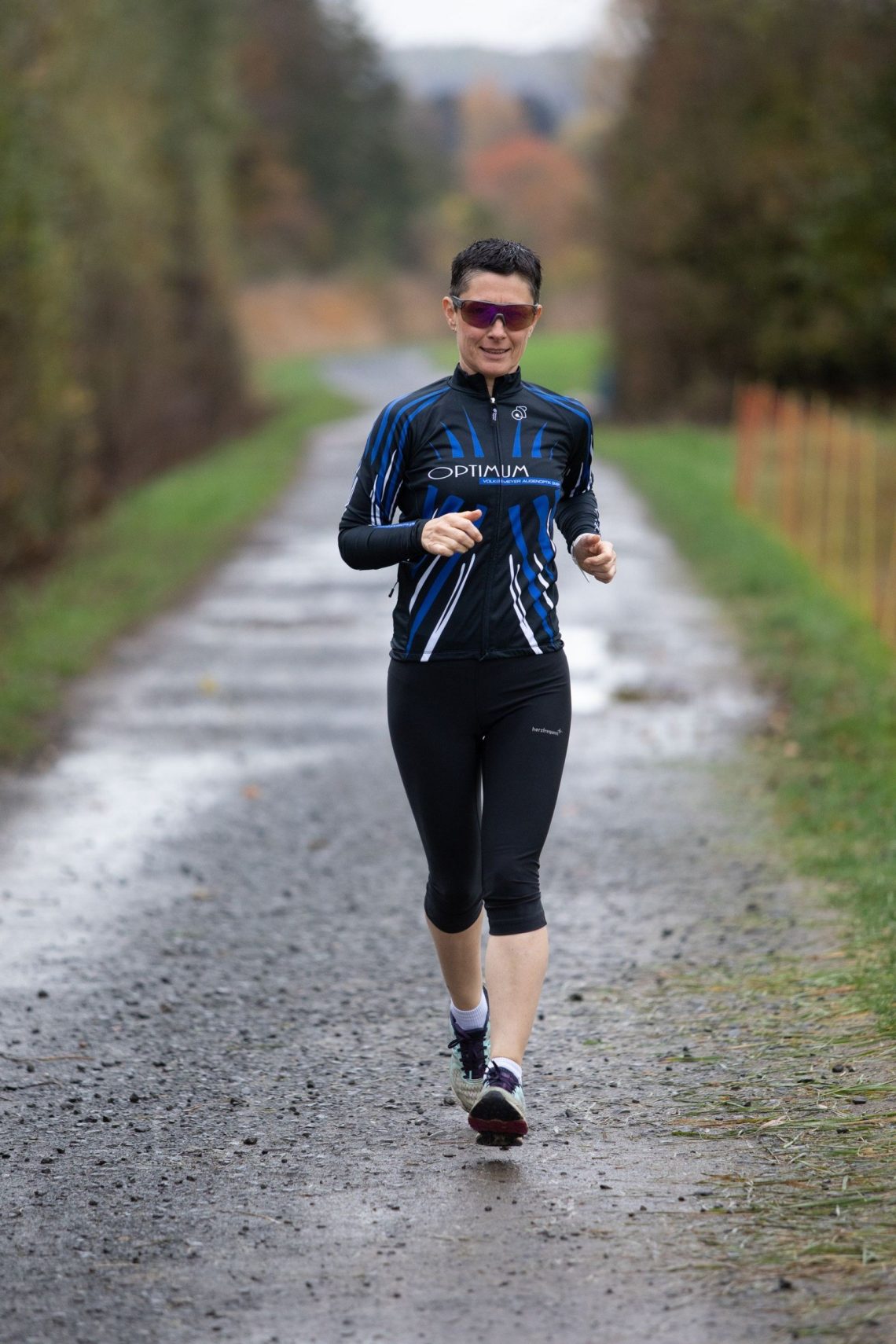
Wet leaves, painted markings, metal covers, timber bridges, and smooth paving deserve attention. Slow to a walk where needed, leave room for other users, and avoid abrupt changes of direction. Good shoe tread cannot guarantee grip on every wet surface.
Look ahead rather than down at each individual footstep. Give yourself time to choose a line. At crossings, pause and check carefully; drivers may have reduced visibility, and splashing vehicles can distract you at exactly the wrong moment.
Let pace be unimportant
A wet run may take longer because you are slowing for corners and inspecting footing. That is the appropriate response to the conditions. Avoid treating the average pace as something to repair with a faster final section.
Wear familiar kit with practical adjustments
Choose clothing that allows comfortable movement and visibility appropriate to the light. A brimmed cap can help keep rain away from your eyes, if you already find one comfortable. Make sure a hood does not obstruct your view or ability to hear.
A waterproof layer may feel warm during running, so use its ventilation where appropriate and reassess rather than assuming more layers are always better. Secure a phone and other moisture-sensitive items in suitable protection. Test pocket closures before leaving instead of discovering midway that rain can enter around the opening.
Build in a quick return
For a first rainy outing, keep the route modest and close to your starting point. Stop if you become uncomfortably cold, cannot judge the ground, or conditions change. Do not stay out to complete a distance that no longer suits the weather.
Place a towel and dry clothes where you can reach them on return. If you are travelling to the route, consider the time spent waiting for transport in wet clothing; the plan should cover that interval too.
Reset wet equipment
- Remove wet garments instead of leaving them in a closed bag.
- Follow care labels for washing and drying.
- Air shoes according to their manufacturer’s instructions.
- Check that electronics are dry before charging them.
Keep a useful note for next time
Record where water collected and which clothing adjustment helped. A route that worked well in drizzle may still be unsuitable in heavier rain, so describe the conditions rather than labelling it weatherproof.
The value of practising in rain is learning sensible choices, not collecting evidence of toughness. A successful outing can be a short, careful run, an early turnaround, or a decision to leave running for another day.