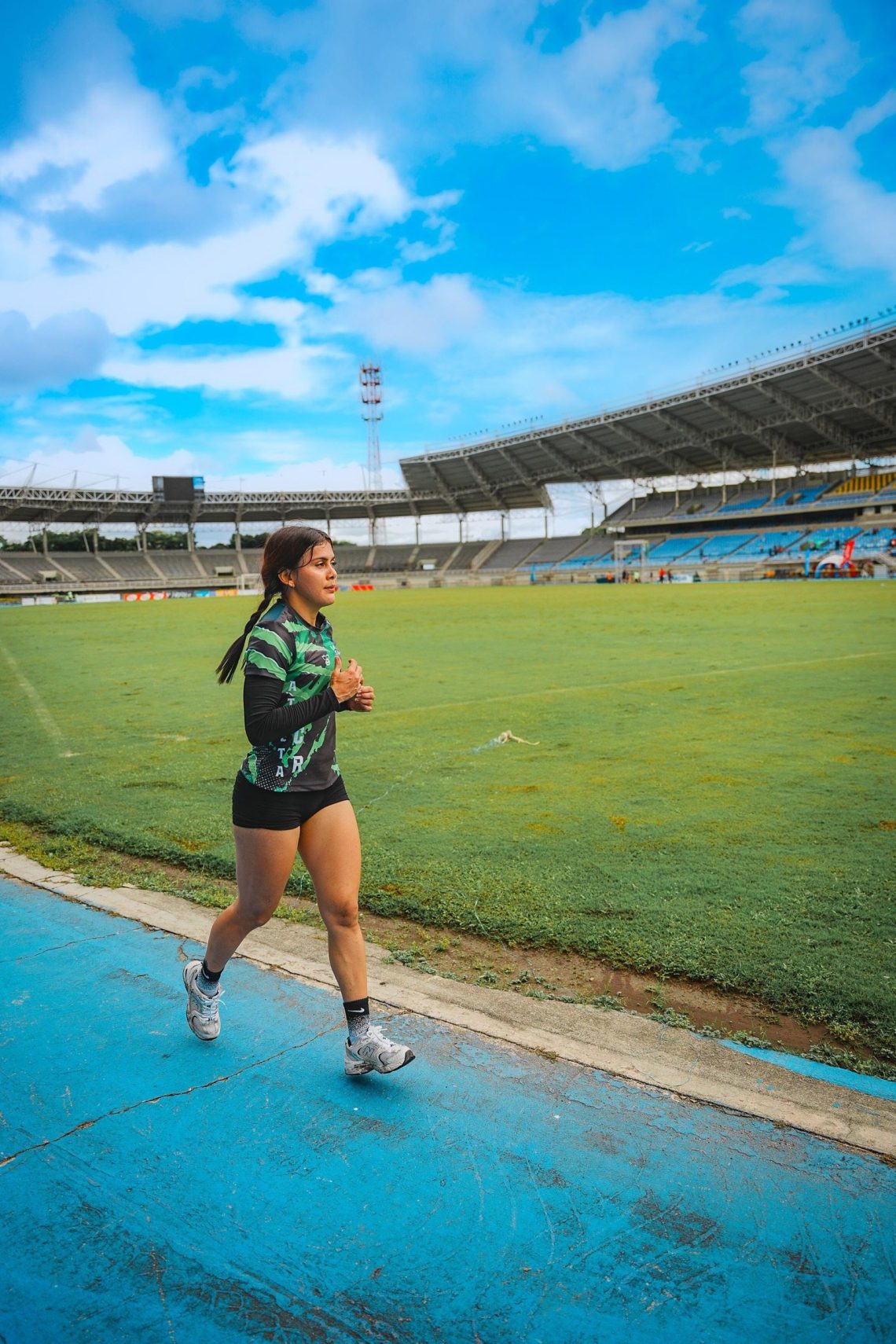
A running track can make navigation simple, but it introduces shared-space rules that are less obvious than those on a park path. Different users may be walking, practising drills, running fast repetitions, or attending an organised session at the same time.

Your first visit does not need to include speed work. Start by learning how the facility operates and finding a suitable space for a modest, controlled outing.
Confirm that public access is available
A track visible from the street is not necessarily open for casual use. Check the facility’s official access information or contact its staff. Ask about public sessions, bookings, charges where applicable, footwear rules, and whether organised clubs have exclusive times.
Look for practical details such as entrance location, toilets, bag storage, and closing procedures. If you arrive and find a sign reserving the track, respect it even if parts of the surface appear empty. A quiet lane may be needed for a group activity you cannot yet see.
Ask three questions at reception or the gate
- Which area or lanes should casual runners and walkers use today?
- What direction is in use, and where should people enter or cross?
- Are any sessions, events, or maintenance restrictions affecting access?
Follow local lane rules rather than assumptions
Many tracks have conventions about faster running and inside lanes, but the facility’s instructions take priority. There may be marked walking lanes, changing directions, or sessions with different arrangements.
Before stepping onto the track, look for approaching runners in every lane you need to cross. Wait until you can cross without making someone alter their stride. Do not stand on the running surface while discussing where to begin or adjusting your phone.
Keep the first outing uncomplicated
After a gradual walking start in the permitted area, use a running or run-walk format that is already manageable for you. The track’s markings are available information, not an instruction to turn every straight into a sprint.
For example, you might repeat a familiar easy pattern while using the track simply as a predictable surface. Decide the duration before beginning and allow for a walking finish. Do not add laps just because counting them feels satisfying.
Handle changes of speed considerately
Check around you before slowing or moving between lanes. Avoid abrupt sideways steps into another runner’s path. Follow the facility’s passing guidance and leave enough room for people whose pace differs from yours.
If someone calls a warning as they approach, stay predictable rather than suddenly jumping in an uncertain direction. Ask staff about unfamiliar calls or conventions during a pause off the track, especially if a busy session makes the arrangement unclear.
Do not mistake lane distance for effort
Outer lanes cover a longer path around a bend than inner lanes. A full-size standard outdoor track is commonly described as 400 metres around its measured inside route, but local facilities can have different layouts. Check posted information instead of assuming four laps represent a particular distance.
You can avoid this issue entirely by using elapsed time for a beginner outing. There is no need to move into a lane reserved for other activity merely to obtain a familiar distance measurement.
Stay aware of the whole facility
Avoid placing bags, bottles, or clothing where users run or walk. Keep off infield areas used for throwing or other athletics unless staff direct you there. An apparently empty patch of grass may be part of an active event zone.
Audio should not prevent you hearing instructions or approaching users. Stop in a designated clear area before checking messages. If the track becomes busier than you can navigate comfortably, shorten the session or ask where a quieter space is available.
Leave the space ready for others
- Collect belongings and litter.
- Finish conversations outside the lanes.
- Respect closing announcements and booked-session times.
- Report damaged surfaces or equipment to staff.
Decide whether the setting suits you
Afterward, note whether the predictable surface helped or whether circling felt less enjoyable than a park route. You can use a track occasionally without making it the centre of your routine.
A successful first visit means understanding the facility, sharing it considerately, and keeping your session appropriate. Speed, lap totals, and comparisons with club runners can remain outside the purpose of the day.