Saving delivery packaging feels sensible until empty boxes block a cupboard and nobody can find the right size for a return. A parcel reuse kit gives useful packaging a defined amount of space and a realistic next job. Everything outside that limit needs another destination.
Choose one shelf, slot, or sturdy container for the kit. Base its size on how often your household genuinely sends parcels, not on the number of deliveries arriving. A family that rarely posts anything does not need a warehouse of flattened cardboard.
Inspect packaging as soon as it arrives
After unpacking, check whether the box is dry, clean, and structurally sound. Look for crushed corners, torn seams, water damage, and punctures. Keep only packaging that can protect another item appropriately. A battered box may be recyclable through your local route without being suitable for another journey.
Remove or obscure personal details and old shipping information before reuse. Keep return paperwork with the item it belongs to, not inside a random saved box. Do not leave address labels exposed on material that will be passed to someone else.
- Retain a few sizes that match likely outgoing items.
- Keep intact reusable mailers only if their closures still work as intended.
- Discard damaged padding through its appropriate route.
- Separate packaging needed for a current return from the general kit.
Flatten boxes without weakening them
Open the original taped join carefully rather than ripping through a cardboard panel. Adults should handle cutting tools, keeping blades directed away from hands and contents. If a box cannot be opened safely, do not damage an item or risk injury to preserve a piece of packaging.
Store flattened boxes upright where possible, with the sizes visible. Keep them away from damp areas, heaters, and access routes. A slot between suitable storage units may work if the cardboard cannot fall into a walkway or interfere with equipment.
Keep useful padding in one container
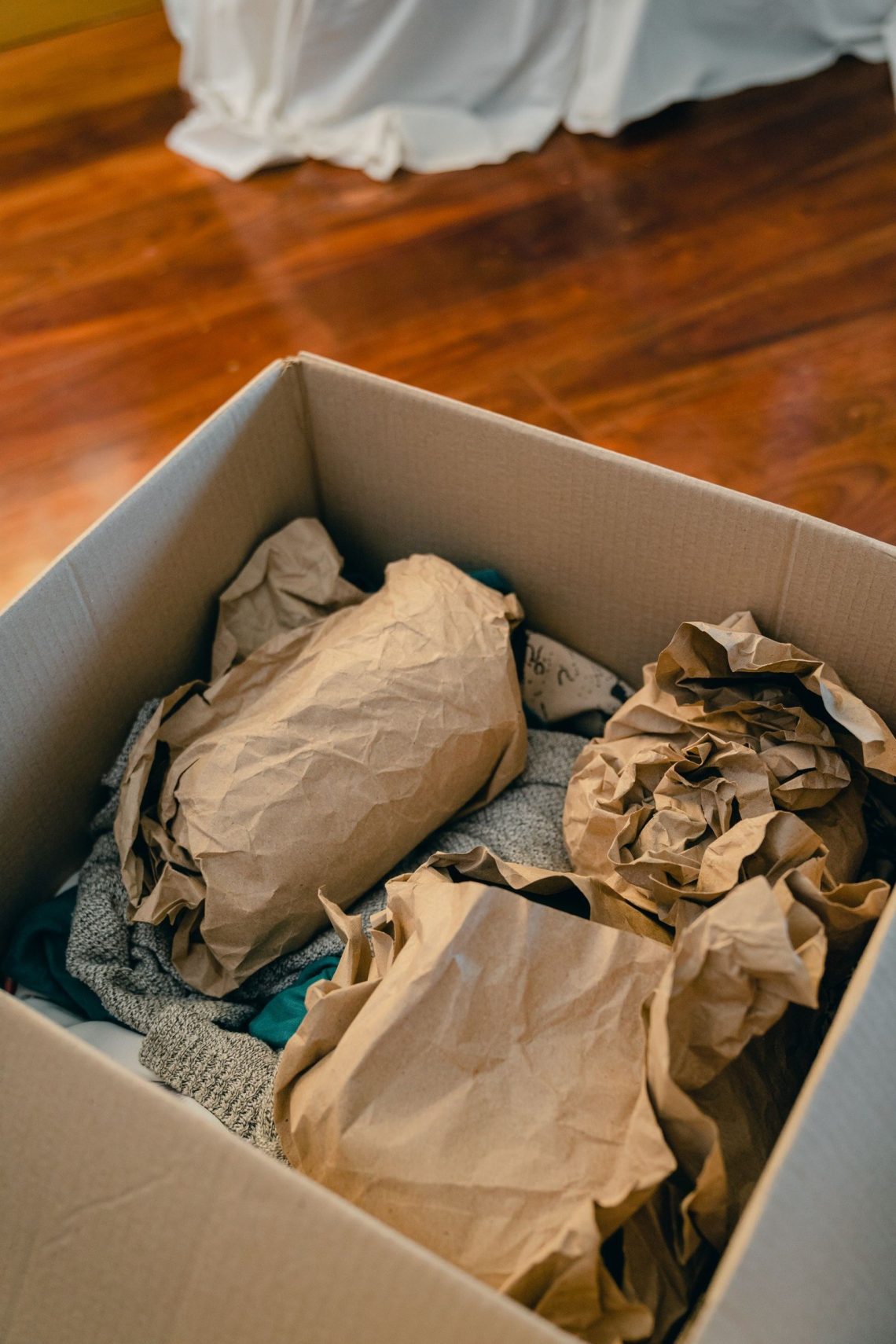
Clean packing paper can be folded loosely for later use. Keep suitable air cushions or other intact protective material together without overfilling the container. Store plastic film and loose packing pieces securely away from young children and pets; they are not play materials.
Choose a package for the object, not the other way around
When sending something, start with its size, fragility, and the carrier’s packaging requirements. Pick a sound reused box with enough space for appropriate protection, but not so much that the item moves around inside. Reuse is useful only if the package can perform its protective job.
Check that the box and cushioning suit the actual contents. A soft textile and a fragile ceramic bowl need different packing decisions. Do not post hazardous, restricted, or unusually fragile items without checking the relevant instructions and service requirements.
Prepare the outside for a new journey
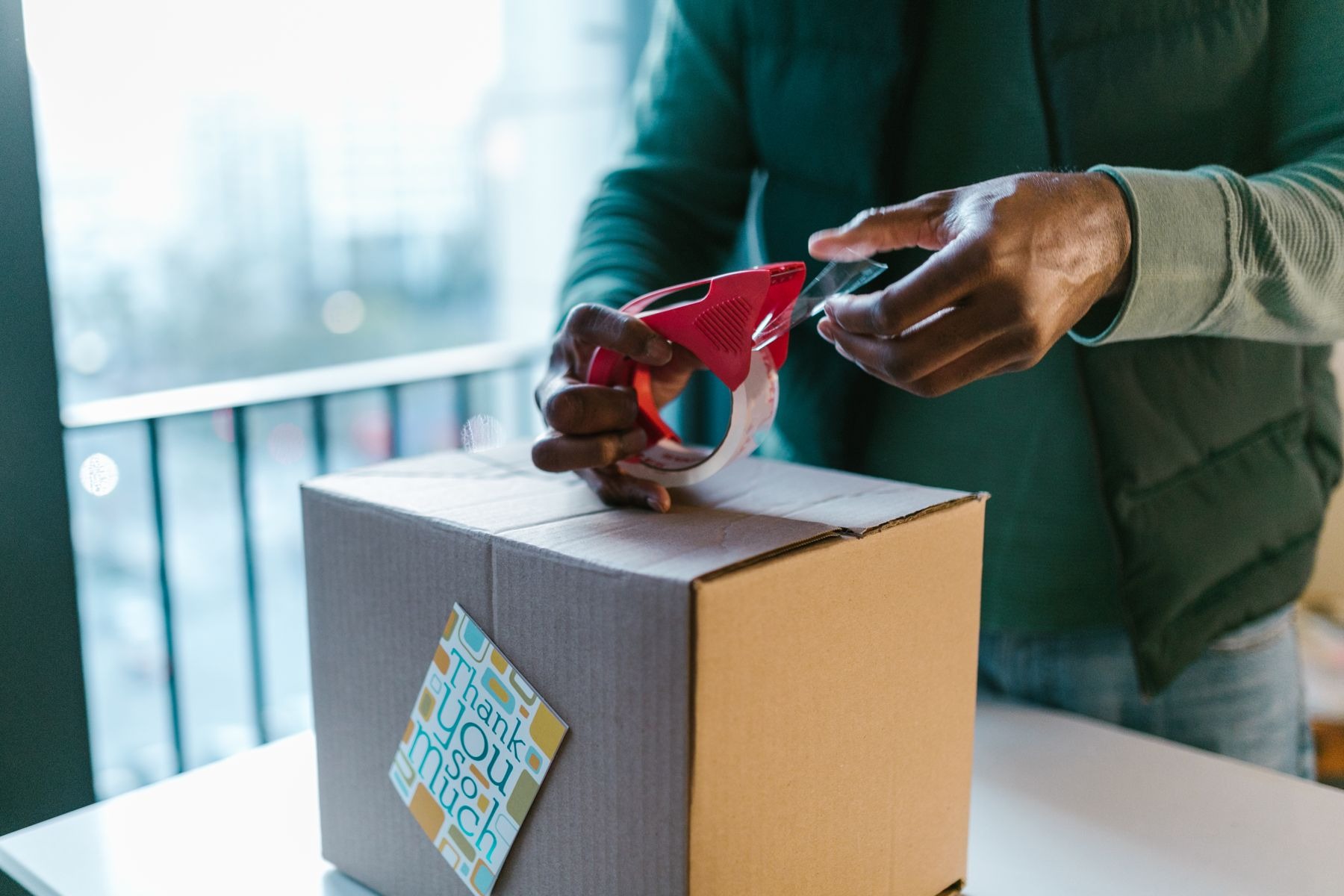
Remove conflicting delivery labels and barcodes as required by the carrier, then apply the new address information clearly. Check all seams and close the box using suitable packing materials. An old strip of tape that has lost adhesion is not a dependable seal.
Keep the correct return label with its specific parcel. If several family members are sending items, make one parcel at a time or mark a temporary working note to prevent label swaps. Complete the sealing and labeling before putting the parcel in the outgoing area.
Give spare material an exit
When the kit is full, compare new arrivals with what is already stored. Keep the more useful sound pieces and send the rest through appropriate collection or a confirmed reuse route. Ask before offering packaging to another household; an unsolicited bag of boxes can simply transfer the clutter.
Local reuse groups or small organizations may accept particular sizes, but verify their needs before setting material aside. Do not maintain a permanent ‘someone might want this’ pile. Keep only pieces with a known destination and a planned handover.
Review the kit after each outgoing parcel
Return unused material to its place and remove scraps created during packing. Note any missing essential, such as suitable tape, rather than buying a complete new packing set. Keep tools safely stored and the shelf accessible for the next actual task.
If months pass without using a particular size, reduce that part of the collection. A compact kit should make the next return or gift easier to pack. The goal is repeated useful service from sound packaging, not preserving every box that crosses the doorstep.