Refills can create a surprisingly untidy cupboard: half-used pouches, bottles that look alike, and a backup nobody remembers buying. Before adding another refill product, make the existing supply understandable. The central questions are what is in each container, whether it belongs there, and when more is actually needed.
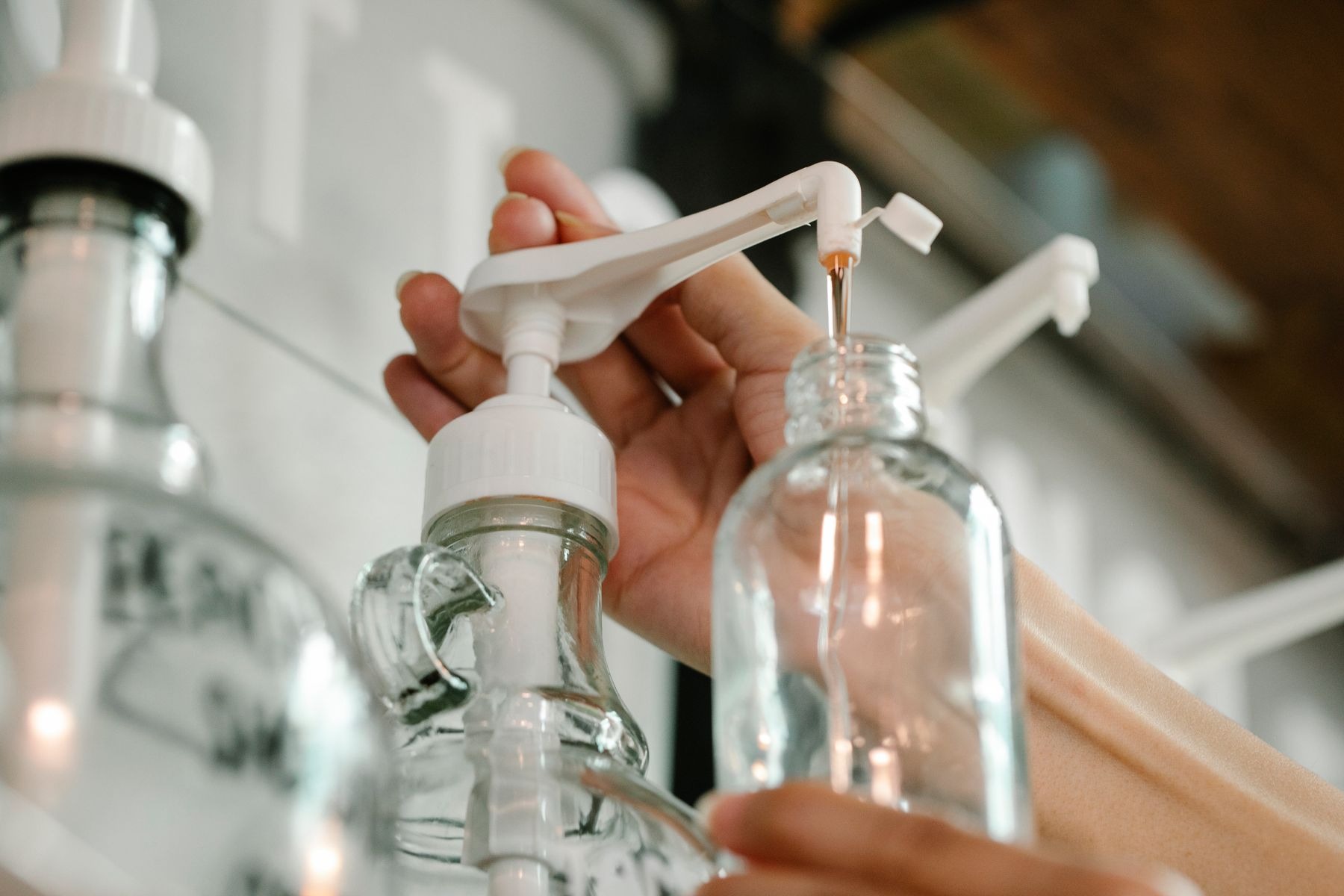
This is an organization project, not a recipe for mixing cleaners. Keep products in their original labeled packaging wherever possible. Use a refill only with a compatible container and method specified by its manufacturer, retaining the information needed for safe use.
Choose one product to organize first
Start with a familiar item such as dishwashing liquid or hand soap, rather than converting every household product at once. Check the active bottle, any backups, and all partial refills. Group identical products together without combining their contents.
Read the labels for storage, compatibility, and refill instructions. Do not assume products with similar scents or names are interchangeable. Even a container that once held the same general type of cleaner may not be suitable for a different formula.
- Identify the exact product and intended use.
- Keep its directions, warnings, and identification information.
- Check that the intended refill container is compatible.
- Count existing usable stock before buying another pack.
Protect the label, not the matching look
A plain decorative bottle can remove information the household needs. Avoid transferring products merely to make a shelf look coordinated. Never put cleaning products into food or drink containers, and do not reuse a chemical container for food, toys, or drinking water.
Where the manufacturer provides an approved refillable bottle, keep its label legible and replace it through the appropriate route if damaged. Any additional household label should clarify the contents, not cover the original directions. Keep packaging information accessible rather than relying on someone’s memory.
Make product identity obvious to every adult
Show other adults where each product belongs and which refill matches it. Different bottle shapes or separate shelf positions can help distinguish products, but they do not replace readable labels. Children should not be responsible for decanting or handling concentrated household products.
Create an active-and-backup arrangement
Keep the working product in its appropriate use location and the backup in suitable secure storage. Cleaning supplies need to remain inaccessible to children, with storage conditions following their labels. Do not put a heavy refill container on an unstable high shelf simply to make it less reachable.
Use a shelf divider or an existing washable tray to group compatible supplies without covering labels. Keep food and drink separate. If a product leaks, follow its cleanup instructions; do not let a tray of unknown mixed residues become a forgotten cupboard problem.
Refill only as instructed
Prepare a stable work surface and follow the specific product directions, including any instructions about an empty bottle, cleaning, drying, or measuring. Do not top up automatically. Different products can have different requirements, and adding new material to an old container is not always appropriate.
Never mix different products or add ingredients to make a refill go further. If dilution is required, use only the exact method and quantity specified. Keep the original package secure throughout the process and close all containers properly when finished.
Set a purchasing trigger you can see
Choose a visible reorder point based on actual use and the time needed to obtain the product. For example, the last unopened compatible refill moving into use can trigger a shopping-list entry. Avoid relying on an opaque bottle feeling vaguely light.
Write the exact refill name on the list so another shopper does not bring home a different formula. If the usual item is unavailable, use a clearly identified suitable alternative in its own container rather than forcing it into your refill arrangement. A temporary change should not make product identity uncertain.
Review packaging and workload together
When the first refill is finished, check what you actually disposed of and whether your local collection accepts it. A pouch, cap, and outer sleeve may have different disposal requirements. Follow the relevant instructions rather than treating all refill packaging as automatically recyclable.
Also ask whether refilling was manageable and whether duplicate purchases stopped. Keep the system if it works with your storage and household responsibilities. If it creates uncertainty or repeated spills, simplify it. An ordinary clearly labeled bottle used fully is preferable to a complicated arrangement nobody can maintain reliably.