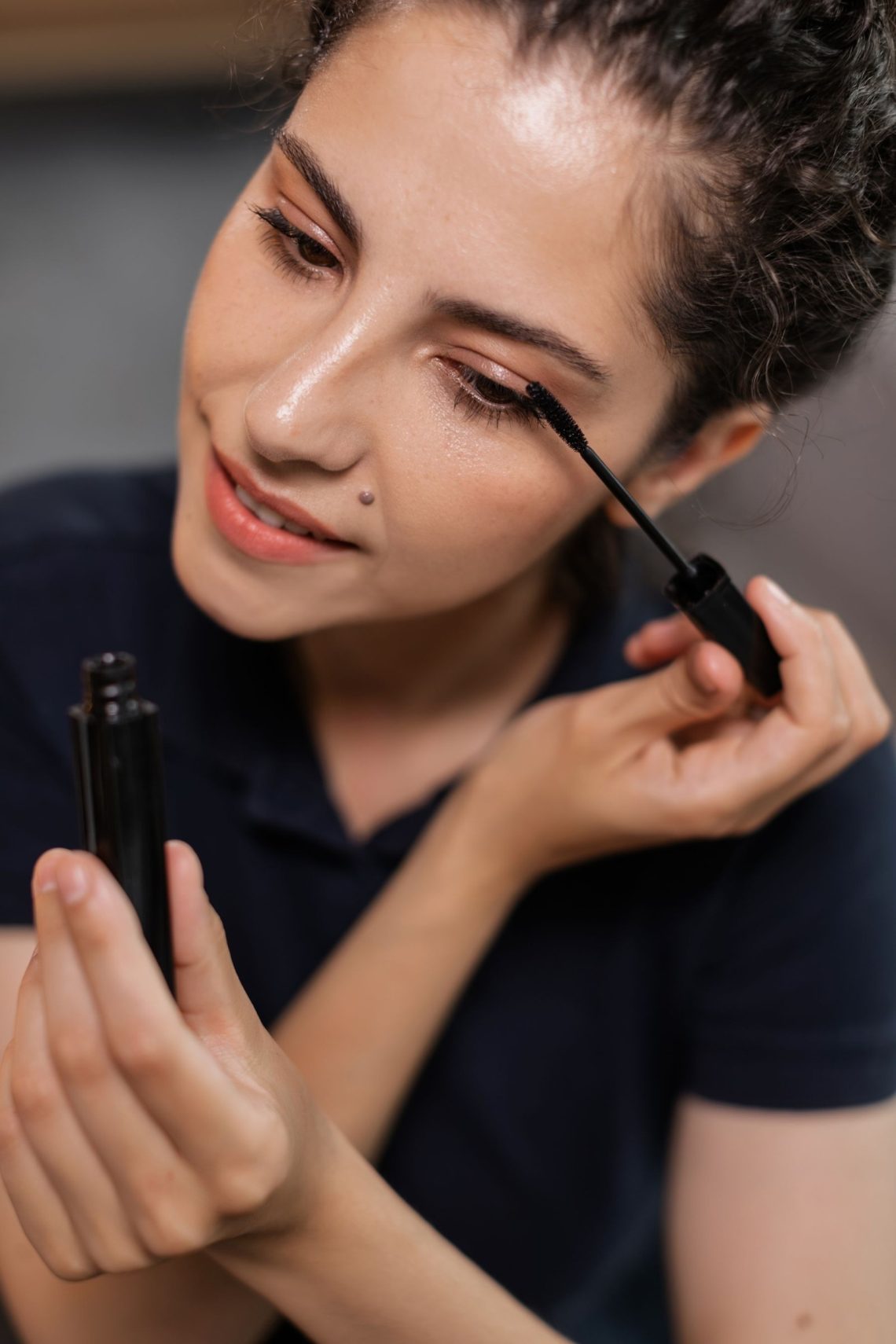
If mascara makes lashes gather into thick groups, another coat may emphasize the grouping instead of adding useful definition. Begin by controlling how much product reaches the wand and which part of the lashes you touch. A small, deliberate application gives you more room to adjust than several quick passes.

The aim here is visible separation, not the maximum possible length or volume. Use a mascara intended for your eye area and follow its instructions. Keep the wand away from the eye itself, work with a steady hand and stop if application feels uncomfortable.
Inspect the brush before it reaches your lashes
Withdraw the wand slowly and look for a large blob on its tip. If the packaging instructions allow it, remove that excess gently with a clean disposable tissue. Do not use a shared towel or place the wand on a counter. Keep the brush in your hand while preparing to apply.
A heavily loaded brush does not have to touch every lash in one pass. If your formula consistently gives more product than you want, test a lighter application technique before deciding you need a completely different eye look. Avoid pumping the wand repeatedly in and out of the tube.
Set up a clear view of the lash line
Use a stable mirror and enough light to see the lashes individually. Position the mirror so you can look slightly downward without stretching your neck. Keep your eyelid relaxed. Looking down can make the upper lashes easier to reach without pressing them against the upper lid.
Apply slowly, especially near the inner and outer corners. There is no benefit in getting the wand as close to the eye as physically possible. Leave a comfortable margin and work on the lashes you can reach with control.
Start with a small central section
Touch the brush to the upper lashes in the middle section, then draw it outward toward the tips with a controlled movement. Keep the pressure light. If you use a small side-to-side motion, make it minimal rather than scrubbing the wand across the whole lash line.
Inspect that section before moving on. Are the lashes still visibly separate? Did most of the product land at the tips? Change the angle or reduce the next pickup if necessary. The first section is a useful check on how the formula and brush are behaving today.
Work outward without repeatedly reloading
Use the product remaining on the brush for the outer section, then approach the inner section carefully. Turn your head if that gives a clearer angle instead of forcing your wrist into an awkward position. You do not have to coat the shortest inner lashes if the wand feels too large to control there.
For lower lashes, decide whether you want mascara at all. If you do, try the light residue on the brush rather than a fresh heavy load. Use small, careful touches and keep the wand off the skin and away from the eye. A subtle lower application can balance the look without creating another dense fringe.
Separate while the formula is still workable
If two or three lashes gather together, pause before adding more mascara. A clean lash comb intended for cosmetic use may help separate them, used carefully according to its instructions. Skip this step if you cannot use the tool steadily. Never substitute a pin, needle or other sharp household object.
Do not keep raking at mascara after it has become rigid. If the result is too heavy to adjust gently, remove it with a suitable eye makeup remover as directed and begin again with less product. Pulling at dried clusters is not a useful correction method.
Judge the first coat before choosing a second
- Check the lashes from straight ahead, not only in a close side view.
- Look for a single heavy section rather than assuming the whole eye needs more.
- Let accidental marks on surrounding skin settle, then remove them gently with an appropriate method.
- Follow the mascara’s directions if applying another coat.
If the first coat gives the separation and definition you wanted, stop there. More coats are an option, not a required finishing step. Close the tube properly after use, do not share it, and follow its replacement guidance. Never add water or other liquids to change the formula when it becomes difficult to apply.