Lace brings detail to an evening outfit before you add a single accessory. Its pattern can soften sharp tailoring, give a simple dress more depth, or make familiar trousers feel ready for dinner and dancing. The trick is to style the lace you actually have: a dense floral fabric needs different partners from an open, delicate design. Start with its pattern, lining, and shape, then build an outfit that feels comfortable enough to enjoy all evening.
Let the lace pattern guide the outfit
Look at your top or dress from a few steps away. Large flowers and bold geometric motifs often read as a statement on their own. Fine, closely spaced patterns tend to look quieter, especially when the lining is close to the lace color. Recognizing that visual weight helps you choose the rest of the outfit.
For prominent lace, try smooth fabrics and simple outlines alongside it. A floral lace blouse with plain tailored trousers gives the pattern room to stand out. Finer lace can sit comfortably beside a subtly textured jacket, provided the textures do not compete at the neckline or cuffs.
Choose one feature to emphasize. It might be scalloped sleeves, a decorative hem, or a beautifully shaped neckline. Keeping that feature visible gives the outfit a clear focus without requiring every piece to be minimal.
Make the lining part of the styling
The fabric beneath lace changes its appearance as much as the accessories do. A lining close to the lace color creates a more continuous surface. A contrasting lining makes the pattern easier to see and gives the garment a stronger graphic effect. Check both options against your preferred level of coverage and the atmosphere of the venue.
If a top needs a separate underlayer, choose a smooth camisole whose neckline works with the lace. A straight edge can look deliberate beneath a high lace neckline; a gently curved edge may sit more naturally under a scoop. Check where the straps land, especially around open shoulders or decorative panels.
With a dress, make sure any separate slip follows the intended silhouette without pulling the outer fabric. Sit down and walk around before leaving. If the slip rises, twists, or shows below a scalloped hem, adjust the combination at home instead of spending the evening correcting it.
Give lace tops a clean foundation
Pair a detailed blouse with tailored trousers
Straight or gently tapered trousers create an easy evening partner for a lace blouse. A smooth waistband keeps the join between the pieces tidy. If the blouse has a decorative hem, leave it outside the trousers when its length allows; tucking away that edge can hide the detail that makes the top distinctive.
For a longer or fuller blouse, try a partial tuck only if the fabric settles without bunching. Delicate lace can catch on exposed zipper teeth or rough hardware, so take care when dressing. If tucking distorts the pattern, choose a shorter top or let the blouse fall naturally.
Balance fitted lace with a fluid skirt
A close-fitting lace top works well with a plain skirt that moves away from the body. The contrast gives the outfit shape while keeping the lace visible. Match the skirt’s waistband to a solid section of the top where possible, so the meeting point looks considered rather than crowded with overlapping patterns.
If both pieces are fitted, check that you can sit and move easily. You can keep the sleek outline without choosing a size that strains the lace. Pulling across the bust, upper arms, or hips can distort its motifs and make seams uncomfortable.
Style a lace dress around its strongest detail
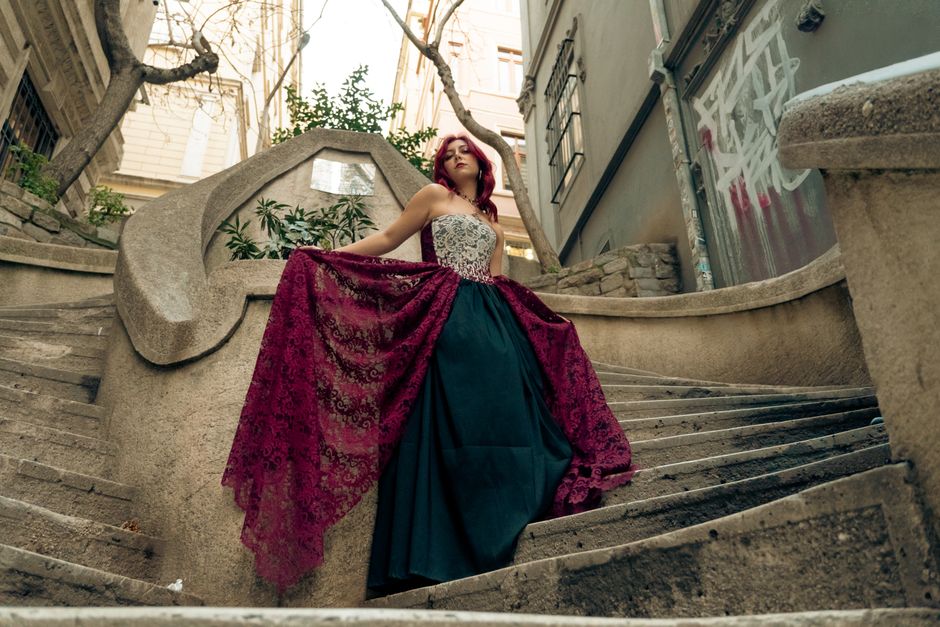
A lace dress already offers plenty to look at, so begin by identifying where the decoration sits. A high neckline with long sleeves may need only small earrings. A simple neckline with an elaborate hem can take slightly bolder earrings while leaving the lower half of the outfit uncluttered.
For an all-over lace dress, smooth shoes and a plain bag are reliable partners. They give the eye somewhere to rest. You do not need to match every accessory precisely: repeating one tone from the dress or lining is enough to make the pieces feel connected.
A dress with lace panels calls for a slightly different approach. Let the panels define the outfit’s focal points. Avoid placing a belt over a decorative waist insert unless the garment was designed for it, and check that jacket edges do not hide an intentional shoulder or neckline detail.
Use color to change the mood
Black lace can feel understated or dramatic depending on what surrounds it. With charcoal trousers and matte accessories, it looks restrained. With a deep green skirt or a rich blue jacket, it gains contrast without needing extra embellishment. Consider the lining too: pale lining beneath black lace makes the pattern much more prominent.
Cream and pale lace can work beautifully after dark when paired with clear, structured shapes. Try a cream lace top with dark tailored trousers, or a pale lace dress with a simple jacket. This keeps the overall effect polished while allowing the lace’s softer character to remain.
Colored lace usually benefits from a limited supporting palette. Choose accessories in one quiet shade, or repeat the lace color in a different finish. When comparing pieces, hold them together in ordinary room light; similar shades can look less harmonious if one is very warm and the other noticeably cool.
Choose accessories that will not catch
Lace has small openings that can snag on sharp settings, clasps, and decorative edges. Run your fingers gently over jewelry and bag hardware before pairing them with a delicate garment. Smooth pieces are especially useful near lace sleeves and necklines, where repeated contact is likely.
- Wear a necklace only if it sits comfortably clear of raised lace or scalloped edges.
- Check that earrings do not repeatedly brush against a high lace collar.
- Choose a bag with a smooth strap where it touches the fabric.
- Keep bracelets simple if they sit against long lace cuffs.
Shoes can echo the garment’s mood without copying its decoration. A plain closed-toe shoe gives a lace dress a composed finish, while a simple sandal can make it feel lighter. Choose a secure fit and a sole you can walk in confidently, particularly if your evening includes stairs or dancing.
Finish with a jacket and a movement check
A plain blazer adds definition to soft lace, while a smooth, relaxed jacket makes the outfit feel less formal. Check how sleeves fit inside your outer layer. Raised motifs and decorative cuffs need enough room to slide in without catching, and a tight jacket can compress the lace into uncomfortable folds.
Before leaving, sit, reach forward, and lift your arms. Check that closures stay secure, the lining remains in place, and the neckline feels comfortable as you move. Look at the outfit with your jacket both on and off. When the lace lies smoothly and your supporting pieces feel easy to wear, you can let its texture do the work.