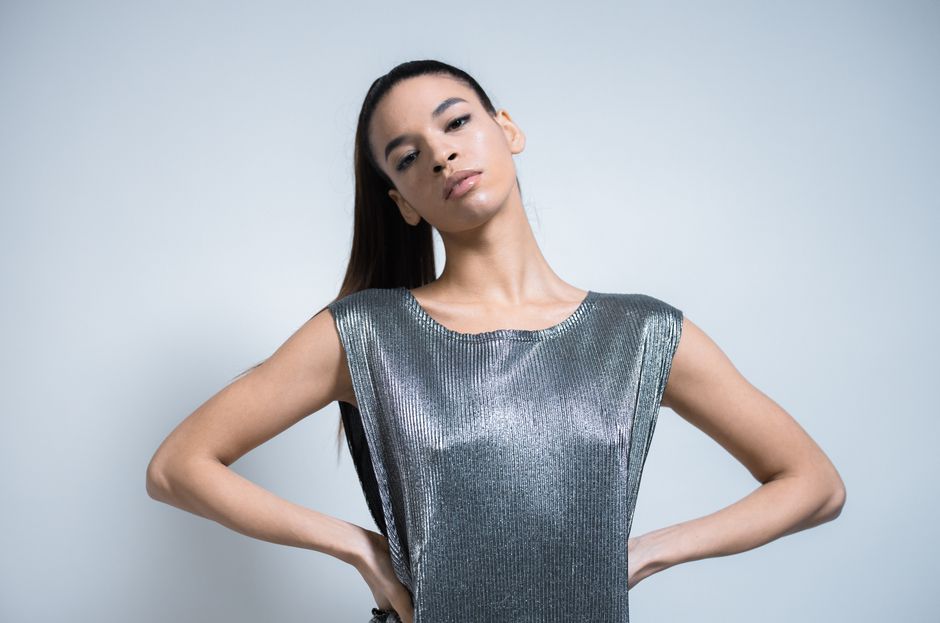
Metallic fabrics bring light and movement to an evening outfit, whether you choose a softly gleaming blouse or a boldly reflective dress. The useful starting point is deciding how you want that shine to behave. A brushed finish can feel relaxed, while a smooth foil surface makes a stronger statement. Once you understand the fabric, you can build an outfit around its texture, fit, and movement without needing a complicated collection of accessories.
Look at the finish before choosing the outfit
Metallic clothing does not have one uniform appearance. Some fabrics contain metallic threads, creating a scattered shimmer within the weave. Others have a coating that reflects light across a continuous surface. A fine metallic knit may look soft and subtle, while a crisp coated fabric can hold a pronounced shape. These differences influence what you pair with the garment and how dressy it feels.
Move the piece around when you assess it. Folds may appear darker, while stretched areas can catch extra light. Look at it near a window and in ordinary room lighting. If you expect photographs, take a quick picture without a filter. You are checking whether you enjoy the effect, rather than trying to eliminate every crease or reflection.
Choose the amount of shine you want
For a gentle introduction, try a muted metallic finish on a simple top. If you enjoy a more dramatic look, a reflective dress offers a clear focal point. Neither approach needs extra decoration to qualify as evening wear. Let the finish set the mood, then use the other pieces to make that mood feel like your own.
Find a color combination that feels natural
Silver, gold, pewter, bronze, and champagne are familiar options, but metallic fabrics also come in blue, green, rose, and other shades. Hold a top or dress near your face and notice whether you like the combination with your hair and complexion. You do not need a strict rule about which metal you are allowed to wear.
- Silver and pewter: Pair with charcoal, navy, soft gray, or white for an easy starting point.
- Gold and champagne: Try cream, chocolate, deep olive, or black to give the shine a grounded setting.
- Bronze and copper: Explore burgundy, dark brown, or muted blue for a rich evening palette.
- Colored metallics: Repeat the underlying color in a matte fabric, or add a neutral you already enjoy wearing.
Treat these pairings as suggestions. The amount of each color and the strength of the reflection can change the result considerably. Try the pieces together before deciding that a combination cannot work.
Give the metallic fabric room to stand out
One metallic garment makes an easy foundation. With a silver skirt, begin with a plain matte top. With a bronze blouse, try simple tailored trousers. The contrast between reflective and quieter surfaces gives the outfit definition. You can keep the shapes familiar while still making the whole look feel suitable for an evening out.
If an outfit seems busy, change one texture before replacing everything. A smooth top might settle a strongly reflective skirt, while a soft knit can relax a crisp metallic trouser. There is no need to make every surface interesting. Leaving some areas visually quiet helps you appreciate the finish you chose.
Make multiple metallic pieces feel deliberate
A matching set can work because the same color and finish repeat throughout the outfit. Keep the silhouette clear and check the complete combination with your shoes and bag. When mixing metals, give one more space than the other. Small silver earrings with a bronze outfit are easier to balance than several equally prominent metallic shades spread across your clothes.
Check fit through movement
Reflective surfaces make folds, seams, and tension more noticeable. This does not mean metallic clothing must be loose. Choose the fit you like, then check that it behaves comfortably. A fitted piece should let you breathe and move without forcing you to keep pulling it back into position.
Sit down, reach forward, lift your arms, and take a few longer steps. Notice whether a waistband digs in, a skirt twists, or a blouse strains across the back. On coated fabric, look for areas where the surface seems stretched. A larger size may help, but a different cut can be a better solution if the rest of the garment then feels oversized.
Consider drape as well. Fluid fabric falls into soft folds, while firmer material creates a more sculptural outline. If you choose a voluminous metallic sleeve or skirt, a simpler shape elsewhere can help the outfit feel intentional. Let the cut provide interest before adding more details.
Pay attention to the inside
Run your hand along the neckline, underarms, seams, and hem. Metallic threads and rough edges may irritate places where fabric rubs against skin. A smooth lining can help, but check that it stays in place when you sit and walk. The garment should feel comfortable beyond the first moment you put it on.
Some coated fabrics feel less airy than they look. Wear the complete outfit indoors for a little while if you plan to dance. If it feels too warm, consider a less enclosed cut or choose a metallic top instead of a full dress. Assess the lining and fit alongside the outer material.
Finish with practical supporting pieces
Your accessories do not all need to match the metal in your clothes. Start with shoes that work with the silhouette and the walking you expect to do. A quieter surface can give a reflective garment space to shine. Check that long hems clear the floor and that closures stay secure as you move.
Look for possible snags, too. Rough bag embellishments, projecting jewelry, and sharp clasps can catch delicate metallic weaves. Try your outer layer over the full outfit and move your arms to check for bunching or friction. A beautiful combination needs to work while you are wearing it, including the journey to the venue.
Do a final outfit check
Look from the front, side, and back, then sit once more. Check whether stretched sections become sheer, whether the lining gives the coverage you want, and whether anything needs constant adjustment. Resolve those small distractions before leaving so you can give your attention to the evening.
After wearing, follow the care label rather than assuming every metallic garment can be washed or pressed the same way. Store delicate surfaces away from rough fastenings. With a finish you enjoy, comfortable movement, and supporting pieces that feel familiar, metallic fabric can become an easy part of your evening wardrobe.