A good beginner route is more than a line that adds up to a distance. It has understandable turns, manageable crossings, and somewhere sensible to shorten the outing. Planning those details in advance lets you pay attention to running instead of negotiating every junction while tired.
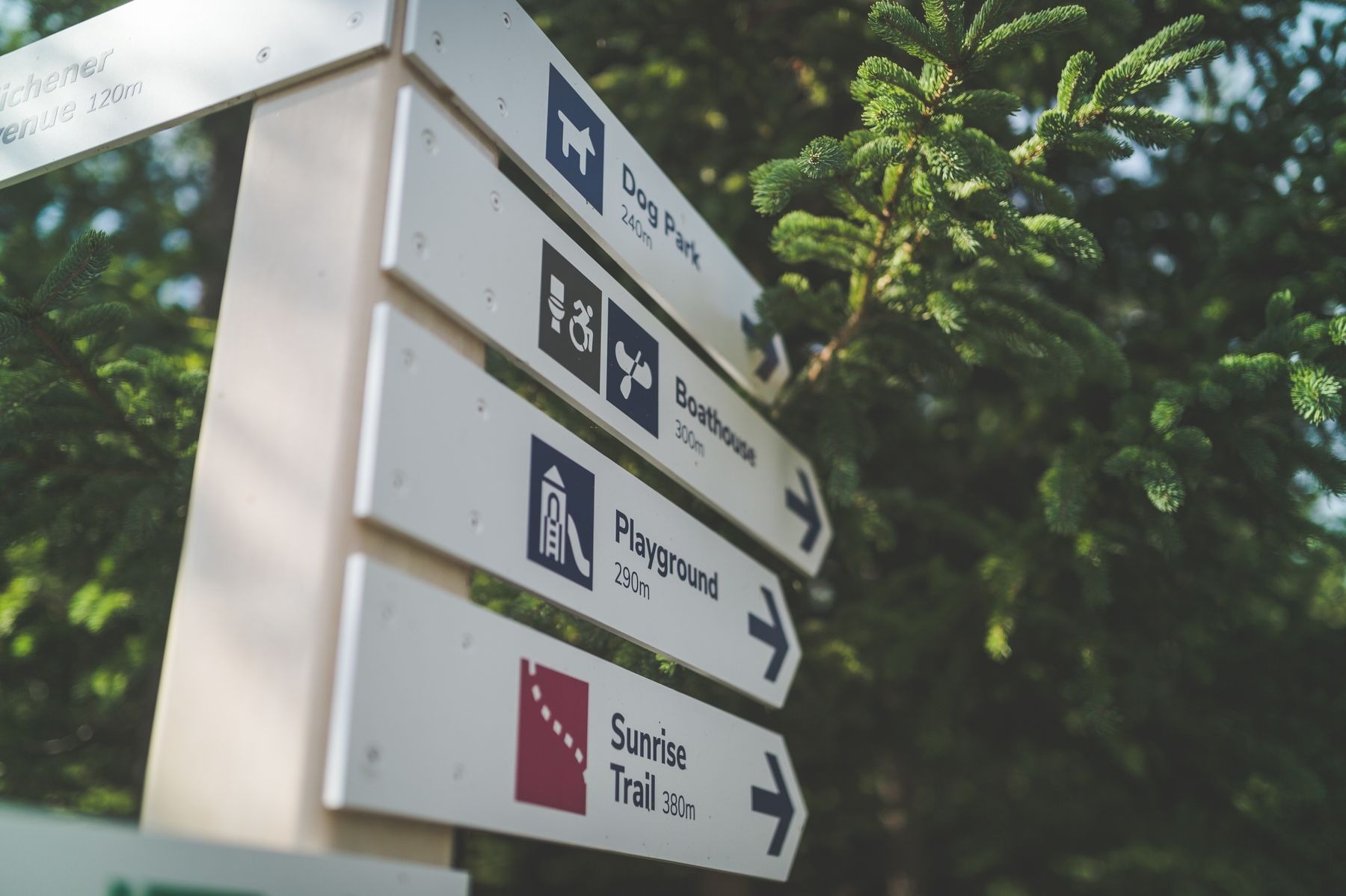
The most scenic route is not automatically the best first choice. Start with a route you can assess easily and use repeatedly, then add variety once you understand its practical limits.
Choose a route shape that matches the uncertainty
A short loop keeps you near the start and allows another circuit only if appropriate. An out-and-back has simple navigation, but you must reserve enough time and energy to return. A point-to-point route adds transport, opening hours, and the possibility of being stranded if plans change.
For early outings, look for a small loop with optional extensions rather than one large commitment. An extra circuit should remain a choice, not the only way to reach a bridge or exit.
Compare the options on paper
| Route shape | Useful feature | Check before using |
|---|---|---|
| Short loop | Frequent return opportunities | Whether repeated crossings become inconvenient |
| Out-and-back | Few navigation decisions | A clear turnaround point and realistic return time |
| Linked loops | Different lengths from one start | Which connector leads home without extra climbing |
Walk the route before running it
Use the pavement or path you would actually run on. A map may not show broken paving, a locked gate, a narrow bridge, or an awkward road crossing. Note places where stopping is straightforward and places where a group of pedestrians might fill the available width.
Visit at approximately your planned running time when possible. A quiet park at midday may have different access, lighting, or activity early in the morning. Conditions can change, so a previous inspection does not replace checking the route as you go.
Put crossings ahead of continuous running
Select formal pedestrian crossings where available and follow local crossing signals. Stop when necessary, establish that it is safe to cross, and never assume a driver has seen you. A running interval can pause; traffic does not need to fit your timer.
Look carefully at driveways and car park entrances, where vehicles can appear across an otherwise uninterrupted pavement. If a route repeatedly creates stressful crossing decisions, choose a less direct alternative rather than trying to become better at rushing through it.
Mark three useful points
- The first optional turnaround, before the route becomes a commitment.
- A shortcut that genuinely reduces distance without introducing an unsafe crossing.
- A public, accessible place where you could stop and ask for help if needed.
Plan for navigation without constant screen checks
Memorise a few major landmarks and the direction back to the start. Save the route or map for reference, but do not rely on continuous mobile reception. Stop somewhere clear of other path users before looking at your phone.
If sharing your plans with someone, describe the route in useful terms: the park loop entered from the library side, for example. An estimated return time and an agreed way to check in are more useful than simply saying you are going running. Keep public activity maps from displaying an exact home start point when privacy matters.
Leave room for the unexpected
A flooded section, maintenance barrier, loose dog, or uncomfortable situation is a reason to change direction. Avoid squeezing past a closure because a navigation app shows the path as open. Choose the known way back when an unfamiliar diversion would introduce more uncertainty.
Before leaving, check the weather, daylight, local access information, and whether essential items are secured. A phone can help with communication, but it cannot make an unsuitable route appropriate.
Keep a small route library
After each outing, record one practical observation: the eastern gate closes early, the shaded bend collects leaves, or the shorter loop avoids school pickup traffic. Build two or three dependable choices for different conditions.
That library gives you flexibility without starting from scratch every time. The aim is not to eliminate every possible risk. It is to notice avoidable complications, leave yourself options, and choose a route whose demands match the day you actually have.