Air-drying becomes frustrating when wet washing arrives faster than it can leave the rack. The answer is not necessarily another airer. It is matching wash loads to the drying space, giving fabrics room, and planning for the items your family needs next.
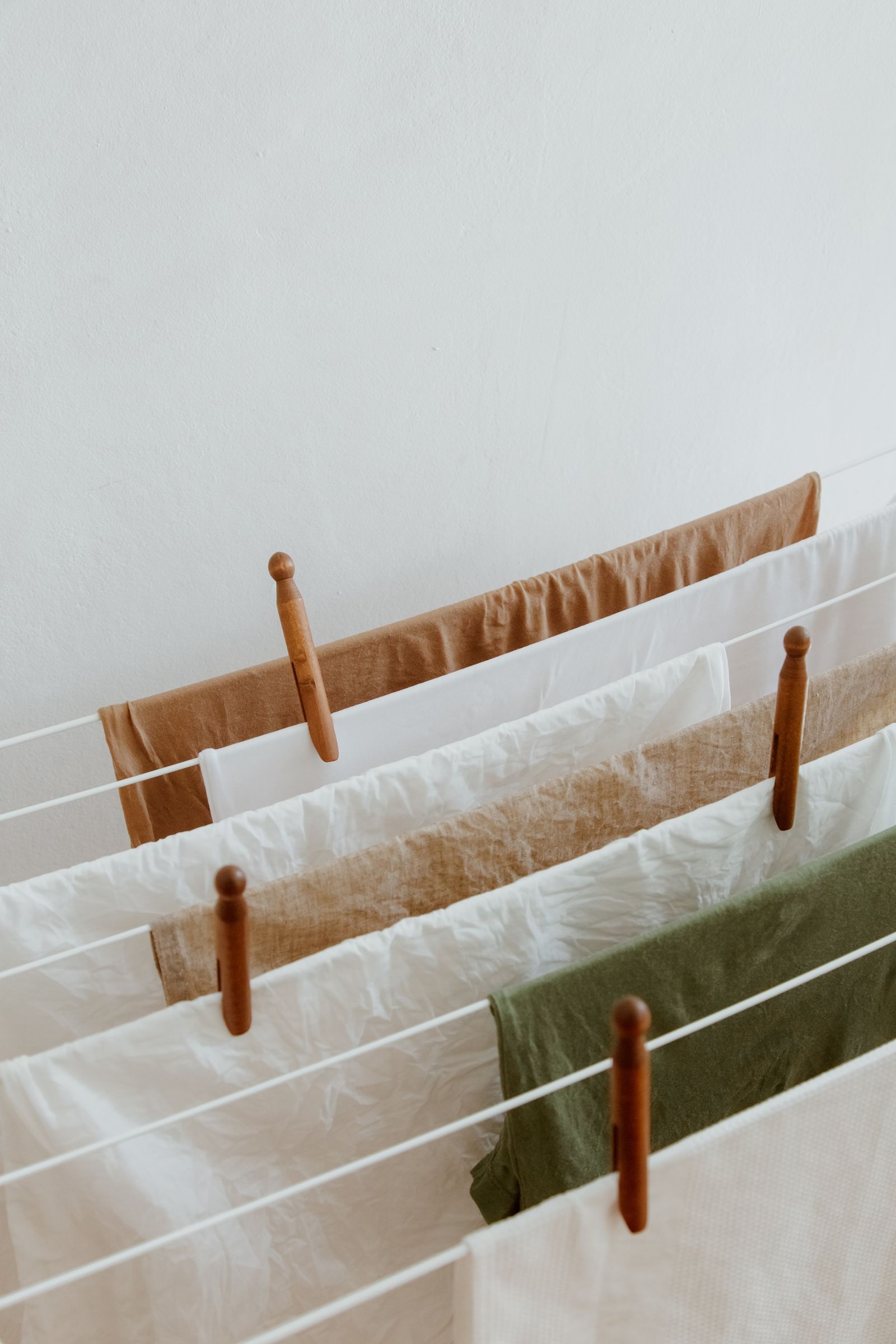
Begin by identifying one suitable drying location and measuring its usable space. Avoid escape routes, cooking areas, and positions where hanging garments touch heaters. Check that a folding rack stands securely and cannot easily be pulled over by children or pets.
Let rack capacity decide the load
Fill the rack with dry garments as a trial. Leave a gap between pieces rather than placing everything shoulder to shoulder. The amount that fits comfortably is your drying capacity, even if the washing machine can hold much more.
Plan bulky items separately. A sheet can cover an entire airer and shield everything underneath from moving air. Towels also need more space than thin shirts. If a load contains several bulky pieces, do not assume the remaining bars can handle a second load that afternoon.
- Reserve enough room for tomorrow’s essential clothing.
- Separate thick items from quick-drying garments when practical.
- Leave a place for socks and small pieces before filling the main rails.
- Delay a nonessential load if the previous one is still damp.
Prepare clothes before they reach the rack
Use the spin setting permitted by the garment care instructions. Remove laundry promptly after washing, shake out each piece, and straighten twisted sleeves, waistbands, and pocket linings. Bunched fabric traps moisture and makes the rack seem slower than it needs to be.
Check care labels before hanging heavy knits. Some garments need reshaping and flat drying so they do not stretch. Use an appropriate flat surface or mesh drying support with airflow underneath, and plan its footprint into the room instead of improvising over upholstered furniture.
Hang by thickness, not by outfit
Place thicker seams where air can reach both sides. Spread trousers so the legs are not pressed together, and open shirts rather than folding them into a dense rectangle. Use hangers only for fabrics that can support their wet weight without distortion.
Manage the moisture, not just the washing
Indoor drying releases moisture into the room. Use available ventilation appropriately, keep air moving around the rack, and watch for persistent window condensation or damp surfaces. Do not shut a heavily loaded airer inside a small unventilated room and expect the moisture to disappear.
If the room remains damp, reduce the amount drying indoors and choose another suitable method for part of the load. A dehumidifier can be an option where appropriate, but it still needs safe placement and operation according to its instructions. There is no benefit in forcing an air-drying routine that leaves the home persistently damp.
Use outdoor space with a simple fallback
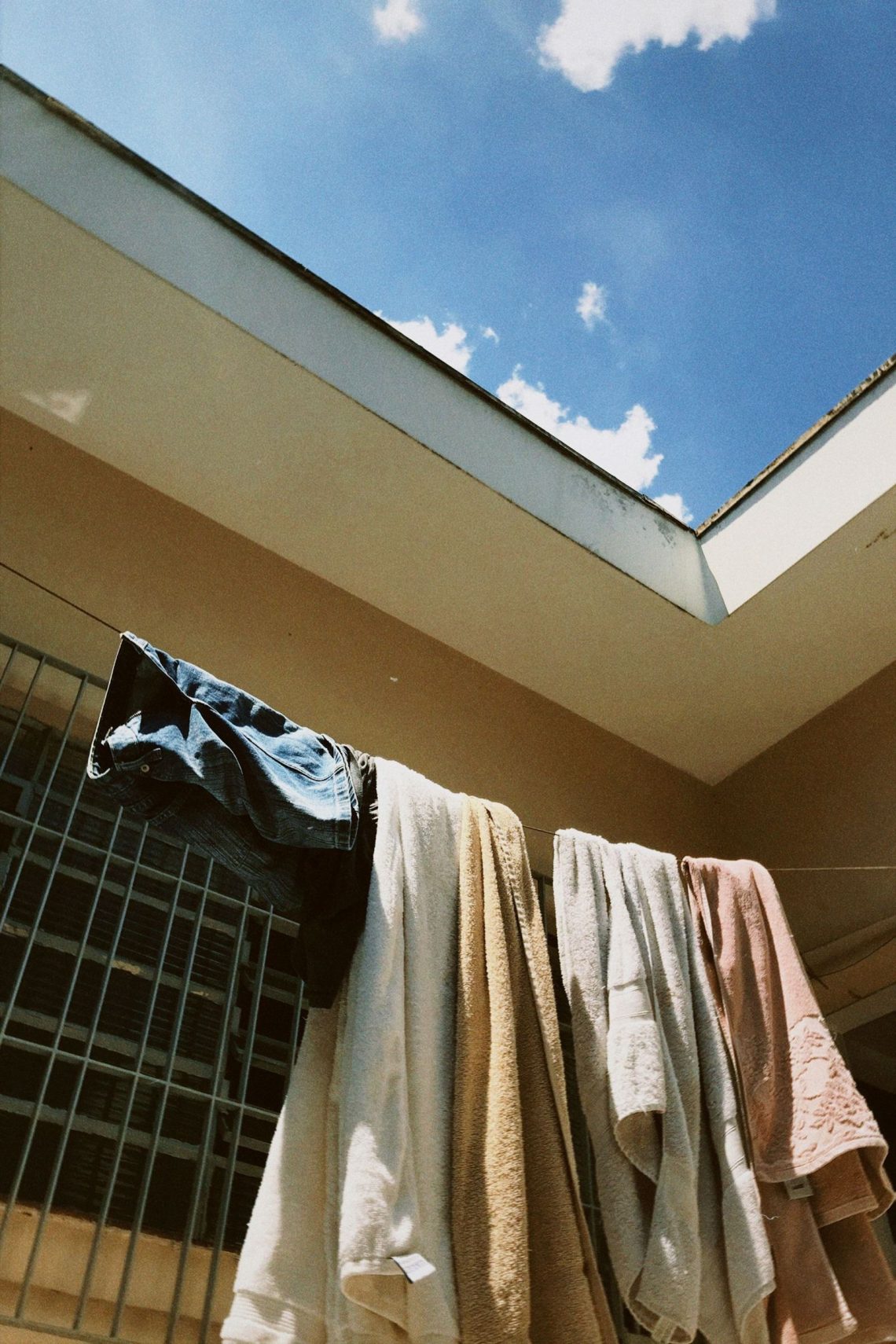
Outdoors, hang laundry where it will not brush dirty walls or foliage. Use secure pegs and leave space between pieces. Check the forecast before washing bedding, but judge the fabric itself before bringing it in; a dry-looking surface does not mean a waistband or towel hem has finished drying.
Have an indoor landing place ready if conditions change. Do not stack half-dry washing in a basket and forget it overnight. Transfer it onto a rack with space, then check thick areas again before folding.
| Problem | First adjustment |
|---|---|
| Sleeves stay damp | Untwist them and separate overlapping fabric |
| Rack never clears | Reduce the next wash to the space available |
| Knits lose shape | Follow flat-drying instructions and reshape gently |
| Room windows stay wet | Improve moisture management and reduce indoor drying |
Close the loop before starting again
Check seams, cuffs, pockets, and waistbands with your hands. Put away only fully dry items. Remove finished pieces as they become ready instead of waiting for the slowest towel; the freed space helps the remaining laundry and prevents a permanent wall of clothes.
Give one family member the rack check and another the putting-away job, with an adult handling adjustments that require reaching or lifting. Fold the rack when it is no longer needed. The aim is a repeatable flow from machine to storage, with drying equipment returning to its own place between loads.