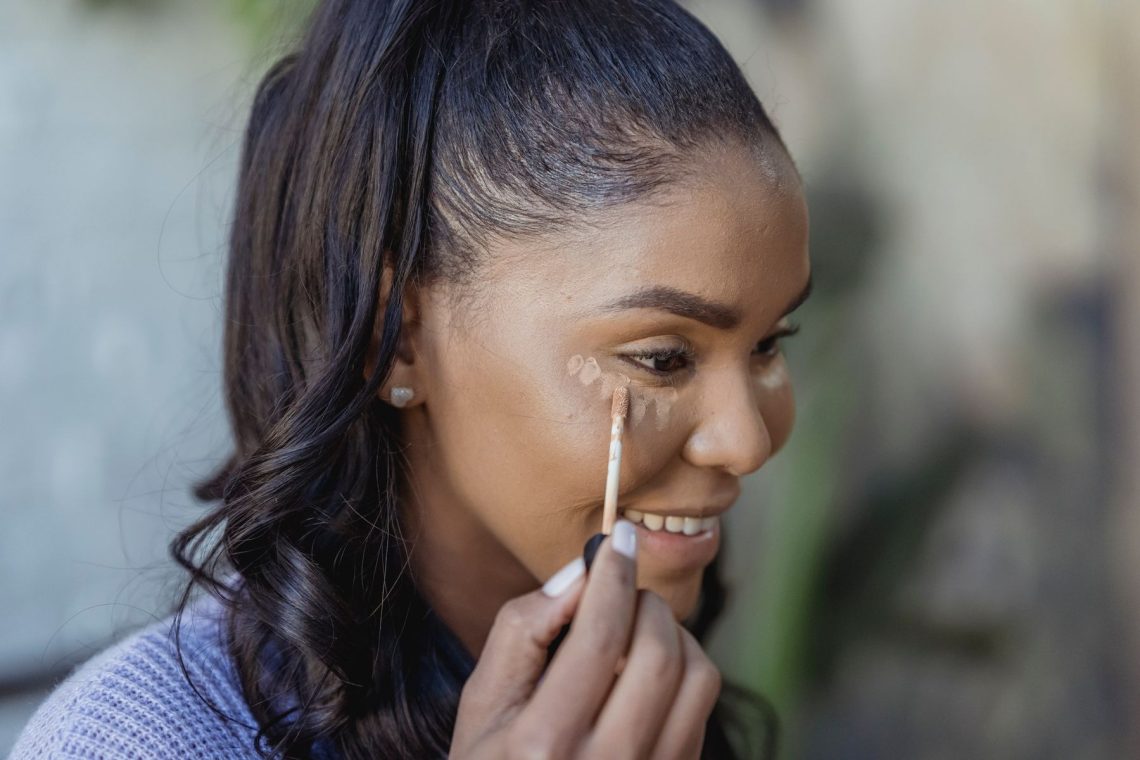
Concealer does not have to cover a large triangle under each eye or become a second layer of foundation. For a lighter everyday base, begin with the exact areas where you want more even-looking color. Leaving the surrounding skin alone makes the finished makeup feel less uniform and often easier to adjust.
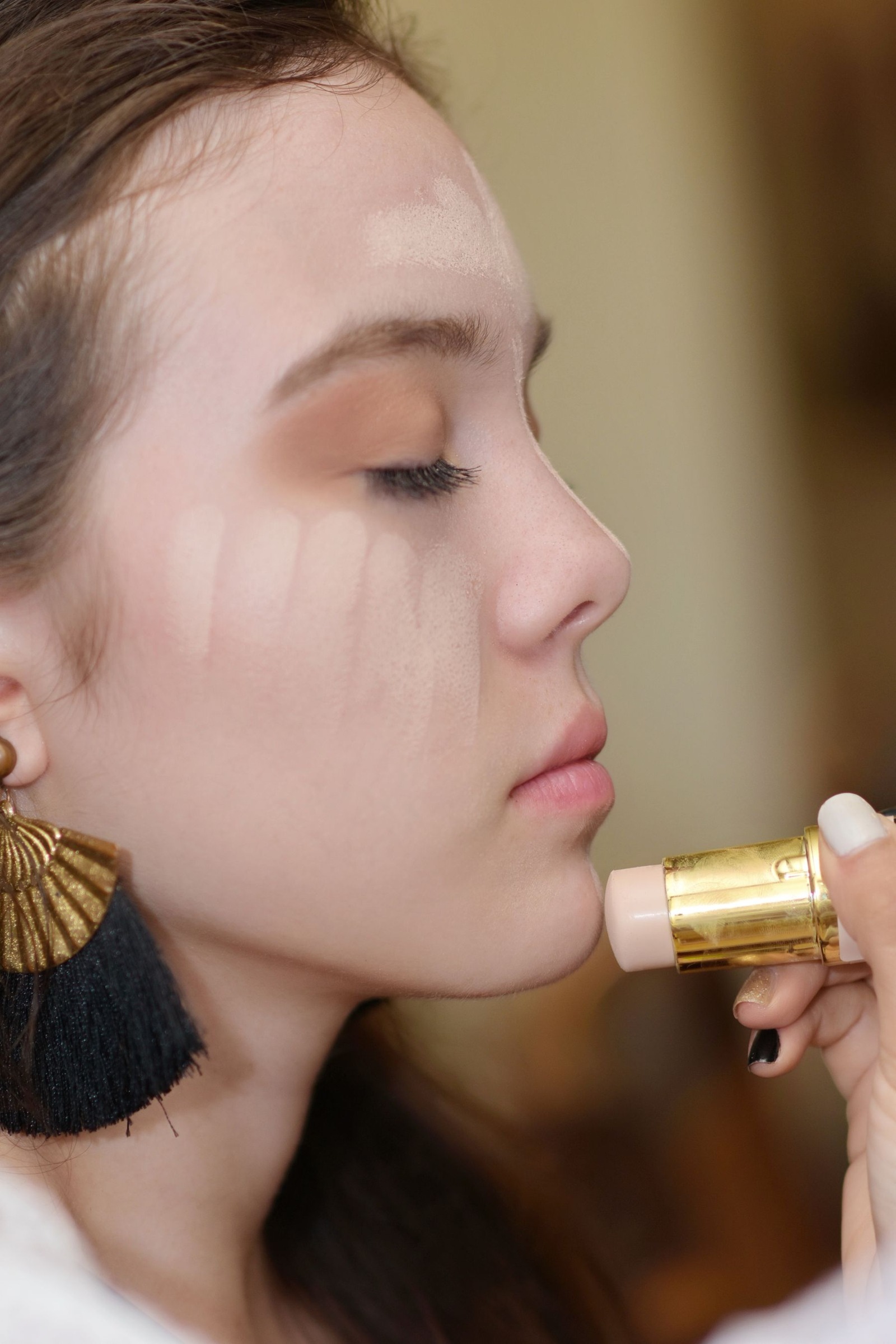
Think of concealer as a placement task before you think of it as a coverage task. A tiny amount in the correct place can be useful; a larger amount on an area you did not want to emphasize may simply make the makeup more visible.
Map the face before opening the tube
Stand in soft, even light and look straight ahead. Notice which areas still draw your attention after any foundation you use. These might include a small shadow beside the inner eye, uneven color near the nostrils or a particular mark on a cheek. Choose two or three priorities rather than treating every natural variation as unfinished work.
Move your head slightly. A shadow created by a facial contour will change as the light changes. Makeup may soften the color contrast, but adding increasingly pale concealer cannot remove the contour itself. This observation helps you stop before a thick patch becomes the main thing you see.
Match the shade to the job
For a small mark on the face, a shade close to the surrounding skin is usually easier to disguise than a bright shade. A noticeably lighter product can turn that mark into a light dot. Under the eyes, compare a close match with a subtly brighter option instead of assuming several shades lighter is always better.
Opacity matters as much as color. A fluid formula may spread easily over a broad area but move when tapped repeatedly. A thicker formula may stay exactly where placed but require a smaller amount. Work with the formula’s behavior rather than insisting that one tube must suit every application.
Use a small, clean working surface
Place a little product on a clean palette or clean fingertip, following the packaging instructions. Pick it up with a small brush if that gives you more control. A large doe-foot applicator can deposit more than you need, so you do not have to press its entire surface onto each area.
Blend the boundary, not the whole patch
- Place a tiny dot directly on the area you want to soften.
- Press lightly to distribute it without spreading far beyond that area.
- Use a clean brush tip or fingertip to soften the outside edge.
- Pause and inspect at normal mirror distance before adding more.
For an under-eye application, begin where the visible color contrast is strongest rather than coating the whole lower lid. Keep product out of the eye and away from the inner rim. Use a comfortable touch without pulling the skin taut. Blend toward surrounding skin only as far as needed to lose an obvious edge.
If tapping removes the coverage, stop working the center. Give the formula time to settle, then assess its border. More blending is not always better. A dense spot can become a wide sheer patch if you repeatedly move it around.
Set only where the finish needs help
Inspect before adding powder. If a small amount has gathered in a line, gently smooth it with a clean tool first. Powdering over that gathering can preserve the unevenness. Pick up a little powder on a small brush, release loose excess and press only where you want a less mobile finish.
A fully matte under-eye is not a requirement. If powder makes the area look more textured, try less powder or leave that part unset on the next application. Compare the result after ordinary wear rather than judging only the first minute.
Make a localized correction later
For a touch-up, remove obvious loose flakes or excess surface shine gently before adding anything. Place a trace of concealer only where coverage has disappeared and blend the boundary again. Avoid painting another full layer across an area that still looks fine.
At the next application, use what you observed: less product where it gathered, a closer shade where it looked bright, or a smaller brush where the patch spread. These small, specific adjustments are more useful than continually increasing coverage across the entire face.