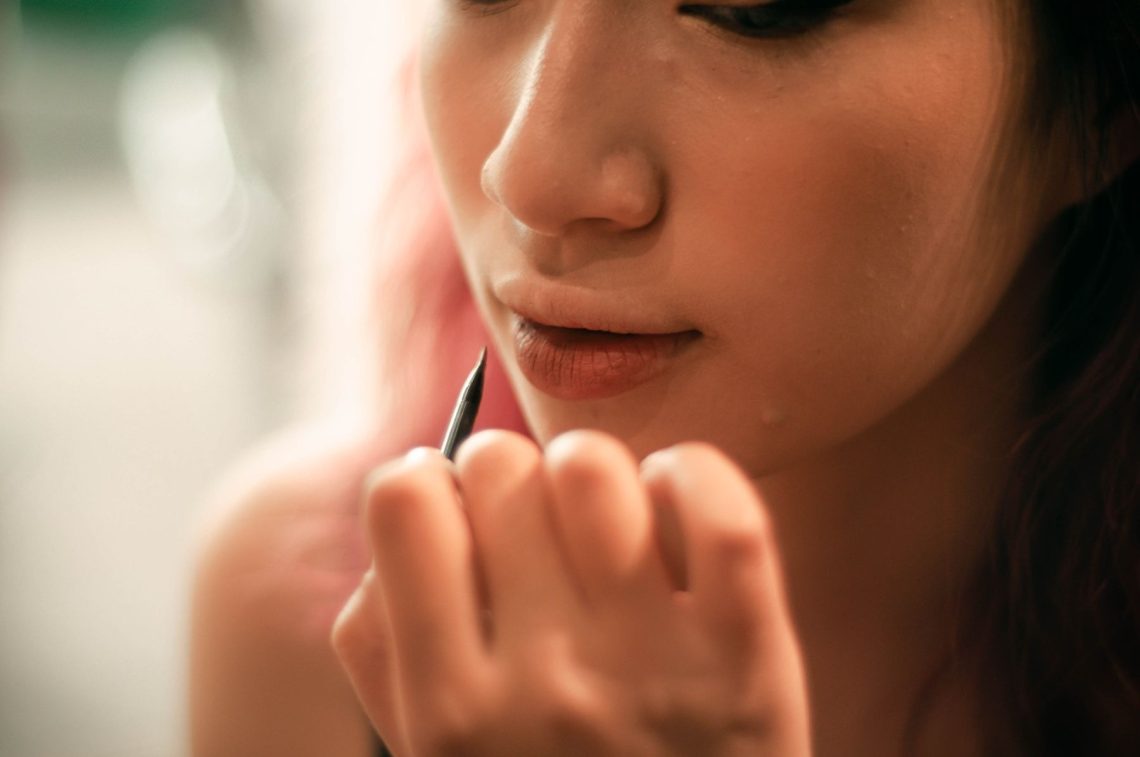
Lip liner can define the edge of lipstick without becoming a visible border of its own. The key is to build a soft line in short sections and blend it inward. Trying to draw one uninterrupted outline usually gives you less control, especially around the corners and the curve of the upper lip.
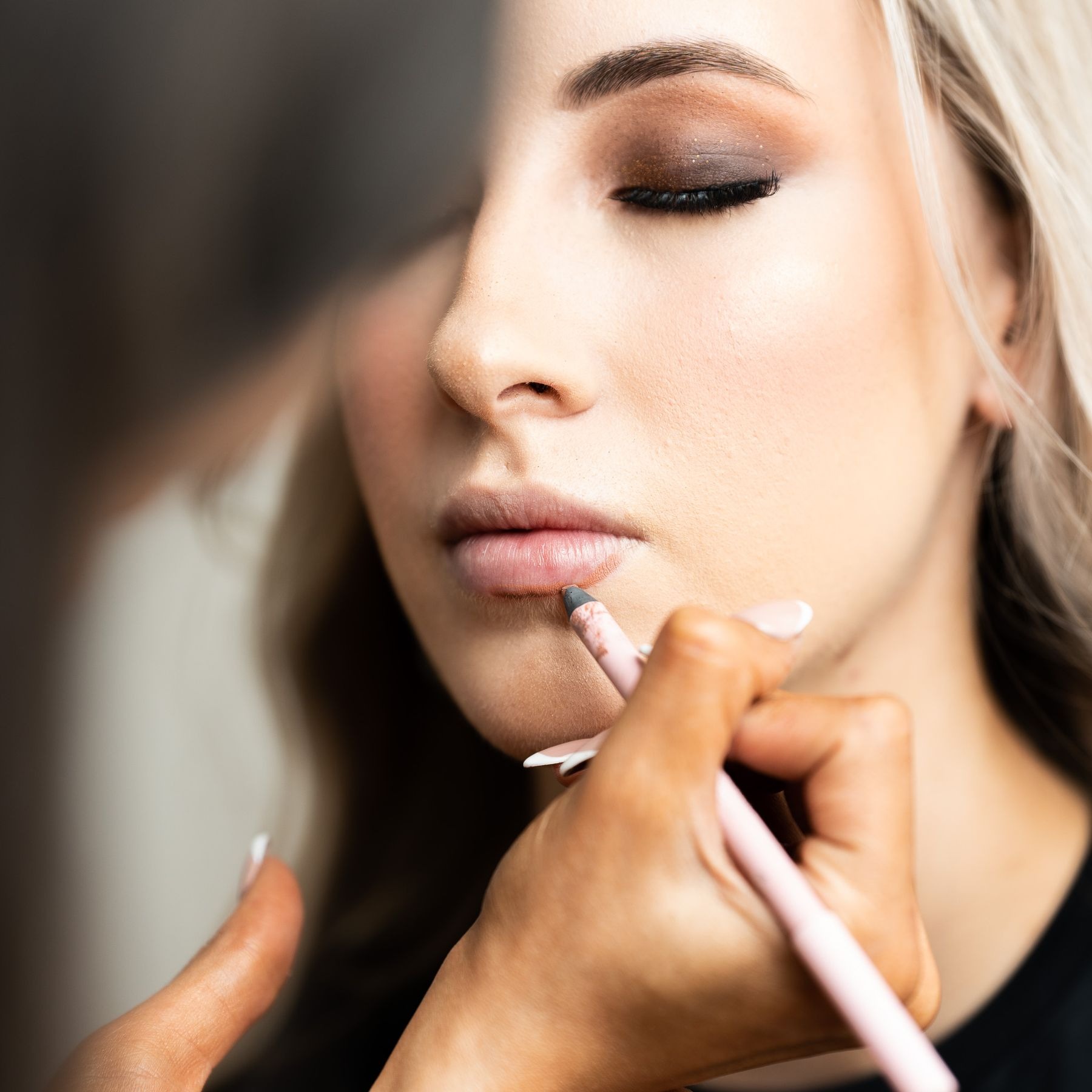
Start with your natural lip boundary rather than attempting a new shape. You can refine individual sections after you understand the pencil. Keeping the initial application close to your own outline makes small corrections easier and reduces the temptation to redraw both sides repeatedly.
Choose a pencil for the finished combination
If you want an unobtrusive edge, compare the liner with the lipstick you plan to wear, not just with the pencil’s packaging. Apply both on a clean swatch surface and look at them together. A liner that is much darker or much browner may remain obvious when the lipstick fades.
A sharpened wooden pencil provides a defined point; a retractable one may need its tip shaped according to the packaging instructions. Neither is automatically better. Test the pressure required on the back of your clean hand. If the pencil skips or drags, do not solve that by pressing hard against your lips.
Prepare for precision, not extra slip
Begin with clean lips. If you use a familiar balm, allow it to settle and gently blot obvious excess before lining. A very slippery surface can make a precise pencil line difficult. Do not scrub at loose skin to create a perfectly smooth canvas; work gently and skip color if application feels uncomfortable.
Use a mirror that lets you see your entire mouth at once. Strong magnification can encourage unnecessary correction of tiny differences. Rest your elbow on a stable surface if helpful, relax your jaw and keep the lips in their normal position rather than stretching them into a smile.
Draw reference marks, then connect them
Begin with the central curves
Make a short mark along each side of the upper lip’s central dip, following the visible edge. Add a small mark at the center of the lower lip. Keep these marks light. They are reference points, not final lines that must be made dark enough to see from across the room.
Move outward in short strokes, pausing between sections. Turn your head slightly if that gives a clearer view. Near the corners, use especially small movements and avoid extending pigment beyond the place where the lips meet. A thick corner can make the whole outline look heavier.
Soften toward the center
With a clean lip brush or the pencil used very lightly, blend the inner side of the line toward the center of the lips. Keep the outer boundary where you placed it. This creates a transition between liner and lipstick instead of two separate bands of color.
- Check the central upper curve before darkening it.
- Compare the corners with your lips relaxed.
- Soften any isolated dark section before adding lipstick.
- Step back from the mirror to judge the overall balance.
Add lipstick without erasing your work
Apply a thin layer inside the outline, then bring the color toward the edge with a brush or a controlled pass of the lipstick. Avoid repeatedly sweeping across the boundary. If you use a sheer lip color, keep the liner soft enough that it does not overpower the center.
For a more uniform fading pattern, you may prefer a light layer of liner across the lips beneath lipstick, provided you enjoy the texture. That is optional, not a guarantee of all-day wear. Try it separately from other changes so you can tell whether it improves your particular combination.
Correct one section at a time
If a stroke lands outside the boundary, remove that small area with a clean cotton bud and a suitable makeup remover used as directed. Let the surface dry before replacing the line. Covering every mistake with thick concealer can create a conspicuous pale rim.
During a touch-up, inspect what remains before adding more pencil. If the liner is intact but the center has faded, replace the lip color first. If the whole application has become uneven, a gentle removal and fresh thin layer may look cleaner than repeatedly reinforcing the border.