Standing beside a park bench pulling one heel toward your seat and walking gradually faster are different activities. Both may appear in a runner’s routine, but they do not do the same job. Understanding the difference makes preparation simpler and stops a long stretching ritual from replacing the gradual start you intended.

For an easy beginner outing, think in three parts: prepare to move, do the running or run-walk section, and ease out of it. Stretching can have its own place without taking over all three.
A warm-up is a transition into activity
The warm-up introduces movement gradually before the main session. For a running beginner, walking along the first part of the route is a straightforward option. Begin comfortably, then let the walk become a little more purposeful if that feels appropriate.
Use this time to notice the ground, settle clothing, and check how you feel. You are not trying to force a particular heart rate or create fatigue before the running starts. The transition should leave you ready for the next part, not already working hard.
A flexible starting sequence
- Walk easily while checking the route and securing loose items.
- Gradually make the walk more purposeful without straining.
- If comfortable, add a few controlled movements such as gentle marching.
- Begin the first running section more slowly than your enthusiasm suggests.
- Extend the walking or skip running if the transition does not feel right.
Dynamic movement means moving through a range
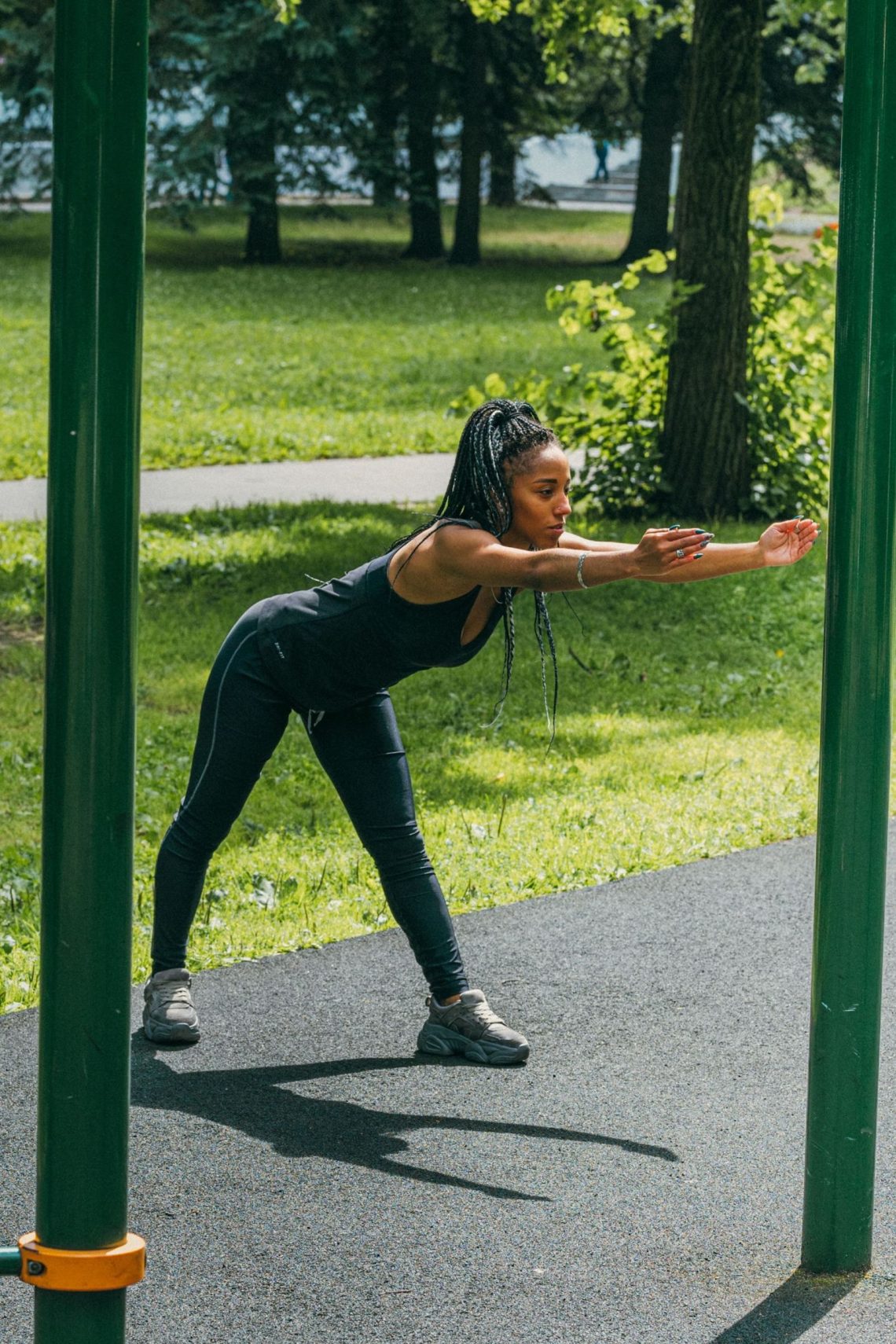
Marching or making small, controlled ankle movements differs from holding a stretch. If you include movement drills, choose familiar actions you can perform steadily. A dramatic leg swing or fast hopping drill is not an entry requirement for an ordinary easy run.
Use support when balance is uncertain and choose a clear space away from cyclists and pedestrians. Keep the range comfortable. The point is preparation, not reaching the greatest possible height or copying someone else’s mobility routine.
A held stretch is a separate choice
Static stretching involves holding a position rather than repeatedly moving through it. It can be part of flexibility work, but a sequence of held positions does not replace gradually beginning the activity you are about to do.
The NHS post-exercise stretching guide illustrates gentle held stretches, including a supported calf stretch. Use reliable instructions if you want to learn one rather than guessing from a photograph. Choose positions appropriate to your own mobility and avoid bouncing or forcing a painful range.
Make the purpose explicit
| Activity | Main role in the routine | Practical setting |
|---|---|---|
| Gradual walking start | Transition into the outing | The first clear section of the route |
| Controlled movement | Practise comfortable movement before running | A flat area with enough room |
| Gentle held stretch | Separate flexibility practice | A stable, unhurried place after activity or another suitable time |
Keep the first running section restrained
A warm-up is not a licence to run hard immediately. Begin with an effort you can control and use walking breaks as needed. If your plan contains intervals, the opening interval should not become a speed test because you feel fresh.
Consider the environment as well. A cold morning, a steep starting street, or a crowded entrance may require more walking or a different starting point. You can move the beginning of the running section without changing the entire outing.
Finish before starting another task
Leave time to slow to a walk near the end. Avoid planning a route that deposits you at a work meeting with no transition. If you choose to stretch afterward, do so somewhere stable where you can concentrate without blocking a path.
You do not need to touch your toes or complete a fixed collection of poses to certify that a run was worthwhile. Nor should stretching be used to push through an uncomfortable symptom or promise that tomorrow will be soreness-free.
Keep what serves the session
Write down a short preparation sequence you understand and can repeat. Change it only when there is a practical reason, such as finding a better place to walk before running. A simple routine with a clear purpose is easier to use than a growing list of borrowed drills.
If a movement consistently causes discomfort, leave it out and seek qualified guidance where needed. Preparation should support the outing, while flexibility practice remains a deliberate choice rather than a compulsory performance.