Paper accumulates because every sheet seems potentially useful. School letters, delivery inserts, and half-used drawing pads end up in the same pile, so people take fresh paper rather than sorting it. A household paper loop gives usable sheets a next job and sends finished paper to the right place.
Work with one shallow tray, one small writing pad or clip, and your existing paper recycling container. Keep the system modest. A reuse pile that grows faster than your family can draw or write is storage, not waste reduction.
Decide what must never enter the scrap tray
Read each sheet before handing it over for children’s drawing. Remove personal details, account information, addresses, school contact lists, and anything else you would not want circulating beyond the house. Deal with sensitive documents through your normal secure route, not through a public craft box.
Keep thermal receipts, heavily coated material, food-soiled paper, and unfamiliar composite packaging out of the general drawing supply. Check your collection service’s instructions for their disposal. Paper-like appearance does not guarantee that an object is suitable for either reuse or household paper recycling.
- Keep documents that still require action in a separate place.
- Use clean, nonconfidential sheets with an unused side for rough work.
- Retain only envelopes that have a clear next use.
- Send unusable paper to its appropriate disposal route promptly.
Make two reuse sizes
Keep full sheets for drawings, planning, and rough homework. Turn a small number of suitable sheets into note-sized pieces for shopping lists or messages. Adults can trim paper with appropriate tools, keeping blades out of children’s reach.
Store the unused side facing up so a person can take a sheet immediately. Put the tray where paper is actually used, such as beside pencils at the family table. If it lives in a remote cupboard, it will not compete with the fresh pad already sitting within reach.
Do not create endless craft preparation
There is no need to trim every sheet into a perfect rectangle. A bent corner or old heading on the reverse does not stop paper being useful for a rough list. Spend effort only where preparation makes reuse easier; otherwise, the cutting and sorting become another unfinished job.
Give school paperwork a route
On arrival, separate notices that need a response from information that can be read and filed or recycled. Put a return date beside the action item. Once the action is complete, decide whether the sheet needs keeping rather than leaving it permanently on the kitchen surface.
Where a school already provides a suitable digital option, use it consistently instead of printing a second copy by habit. Keep paper where it genuinely helps the household remember a task. The aim is not to eliminate a useful format but to avoid duplicates nobody needs.
Finish drawing supplies before opening more
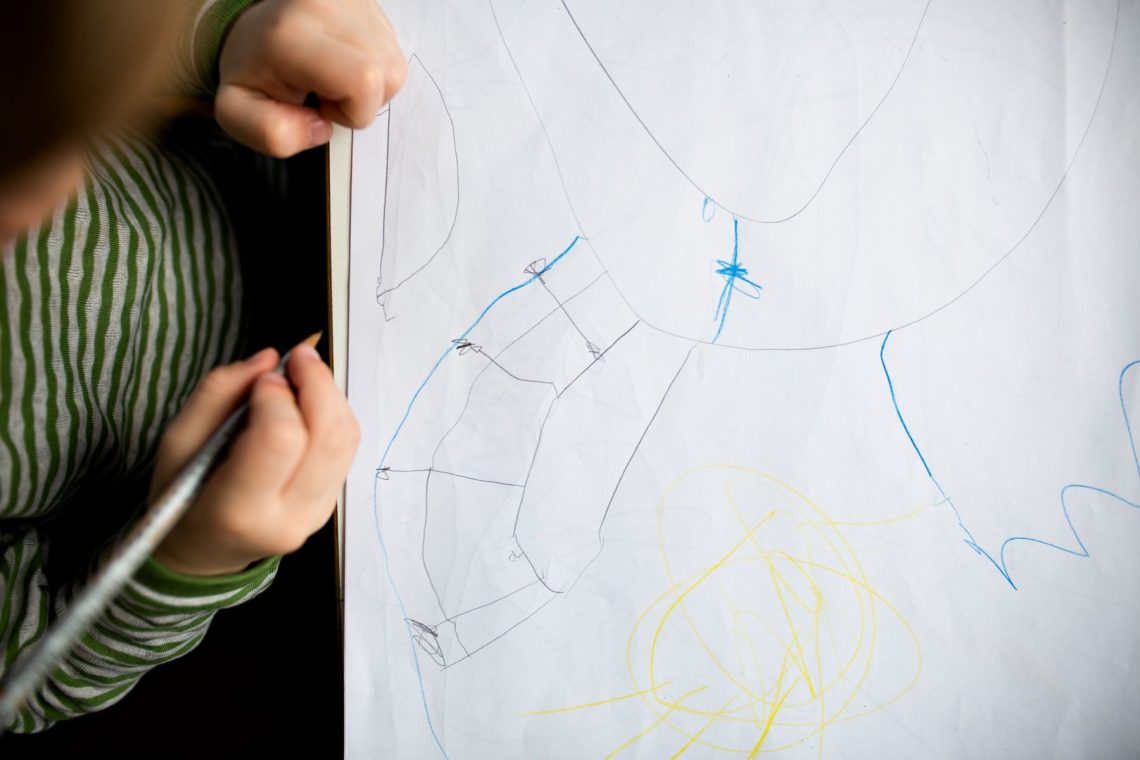
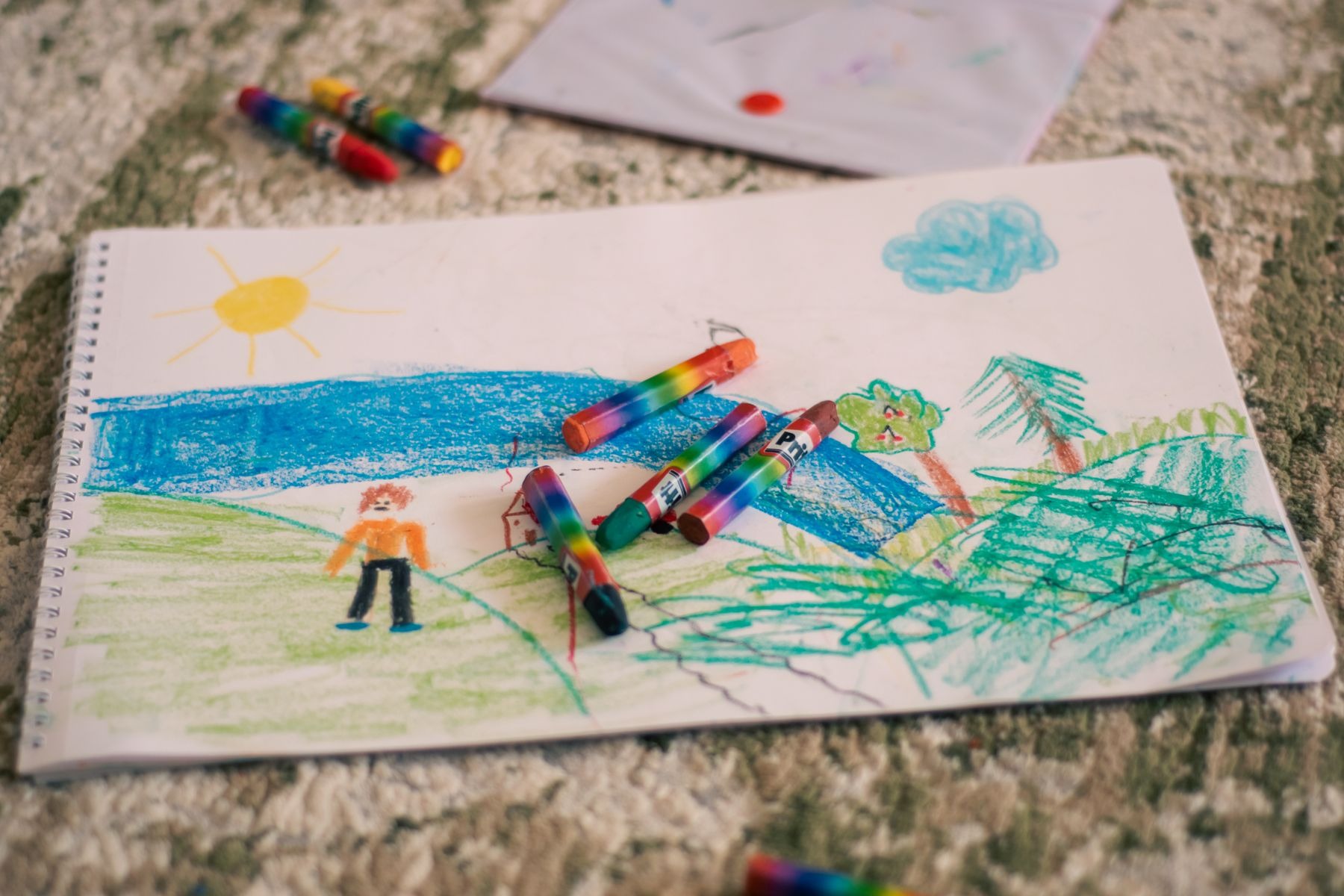
Keep one accessible set of crayons or pencils beside the reuse tray. Invite children to use scrap paper for experiments, games, and practice while keeping special paper for projects that need it. Do not make every drawing session a lesson about waste; simply offer usable material first.
For partially filled notebooks, mark the first blank page with a reusable clip. Store the book ready to continue rather than tearing out all remaining pages. Check what remains before adding another pad to a shopping list.
Choose artwork to keep with the child
Provide a defined folder or display area for favorite pieces. When it fills, review it together and let the child help select what stays. A photograph can preserve a memory of some projects, but ask before discarding something important to its maker.
Artwork with glitter, glue, plastic attachments, or heavy mixed-media decoration may need a different disposal route from plain paper. Follow local instructions rather than assuming every finished craft can go into paper recycling. Separate removable reusable parts only when doing so is practical and safe.
Empty the tray before it becomes furniture
Set a height limit below the tray’s rim. When it is reached, stop adding sheets and use the oldest suitable paper first. Review the supply when tidying the table, removing damaged sheets and anything that no longer has a useful blank area.
If clean scrap paper consistently exceeds demand, prevent it at the source where possible: avoid unnecessary printing or decline unwanted paper materials. Keep enough for actual household use, not every possible future project. The loop works when paper moves through it and leaves, rather than becoming another permanent stack.